
Digital PR Strategy

Freelance Digital PR consultant: research-led strategy that earns media
I'm Robbie Centellas, a freelance digital PR consultant based in London. I build research-led digital PR strategies that earn media coverage, high-authority backlinks and a place in AI search answers for consumer, health and finance brands. At RVU I led a programme that delivered more than 25,000 pieces of coverage and over 16,000 high-authority backlinks across Uswitch.com, Confused.com and money.co.uk, and I've developed and led campaigns that took Chemist4U to number one share of voice in UK consumer media.
Explore the freelance digital PR services I offer.
Why earned media now drives search visibility
Digital PR sits at the point where traditional media relations meets modern search visibility. It is no longer a nice to have that sits alongside your marketing plan. For most consumer and B2B brands it is now one of the primary drivers of organic visibility, brand authority and, increasingly, presence in AI powered search results.
The discipline has changed dramatically over the past decade. Where PR once measured success in column inches and Advertising Value Equivalent, digital PR is judged on backlinks, referring domains, share of voice, organic traffic uplift and now, citation in AI generated answers. The core skill set, building relationships with journalists, telling a story that earns coverage and protecting a brand's reputation, has not gone away. What has changed is what that coverage needs to achieve and how its value is measured.
A strong digital PR strategy is built on the understanding that every piece of earned coverage is doing three jobs at once. It is building brand awareness with a human audience, it is sending authority signals to search engines through backlinks and brand mentions, and it is feeding the data that Large Language Models and AI search tools draw on when they generate answers. Get the strategy right and one piece of coverage can work across all three for months or years after it is published.
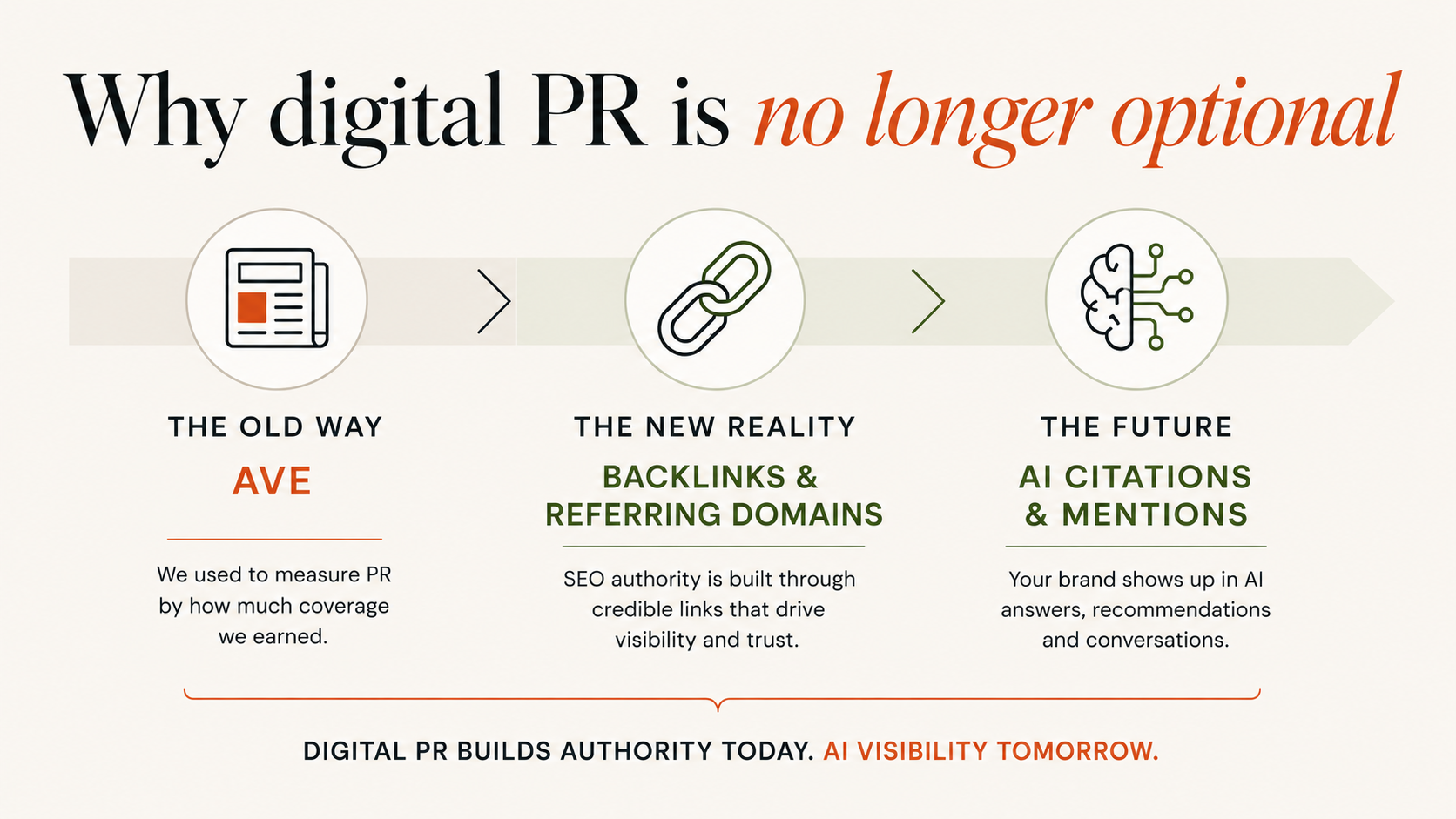
What digital PR means: earned media, backlinks and brand mentions
Digital PR is the practice of securing earned media coverage, backlinks and online brand mentions through a mix of data-led storytelling, expert commentary, campaign-led content and strategic relationship building with journalists, editors and publishers. It draws on the fundamentals of traditional public relations but is built specifically to perform in a digital ecosystem, meaning search engines, social platforms, news aggregators and now AI search tools.
The core outputs of a digital PR campaign typically include
Data-driven stories built from proprietary research, surveys or analysis of existing datasets
Expert commentary and reactive PR responding to trending topics or breaking news
Campaign-led creative concepts designed specifically to earn coverage and backlinks
Strategic partnerships and collaborations with talent, influencers or other brands
Thought leadership content placed through bylines, op eds and speaker platforms
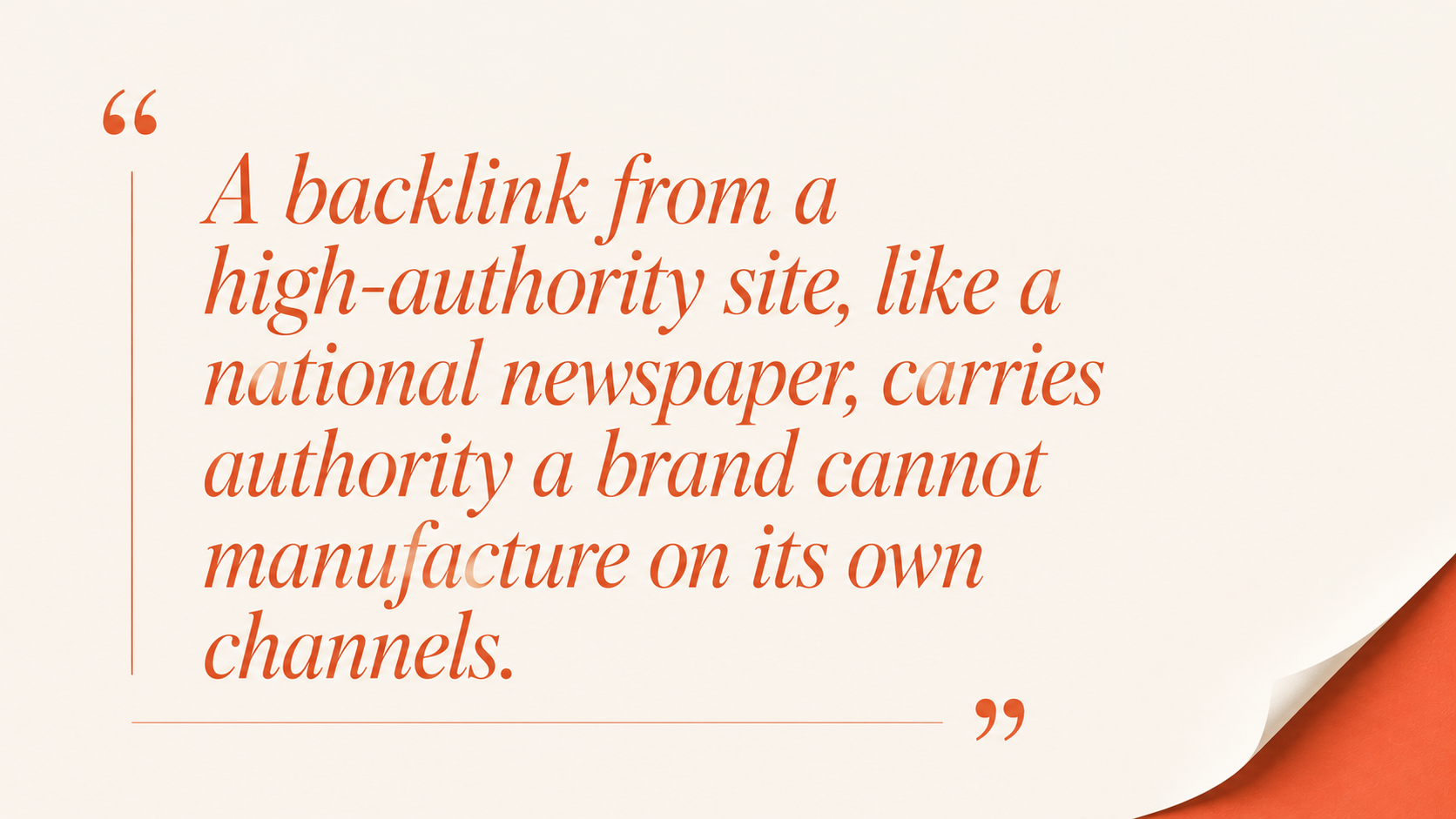
What separates digital PR from a general content marketing or social media strategy is the emphasis on third-party validation. A backlink from a national newspaper or trusted niche publication carries authority that a brand cannot manufacture on its own channels. That third-party endorsement is the currency of digital PR, and it is exactly the kind of signal that both traditional search engines and modern AI systems are designed to reward.
Research-led digital PR: where every campaign starts
Every digital PR strategy I build starts with research, not a brainstorm. Before a single idea is pitched, I need to know who the audience is, which publications they trust, where competitors are already earning coverage and what data or insight the brand owns that nobody else can claim. That groundwork is what separates earned media that moves search visibility and brand perception from coverage that only looks good in a report.
Mapping the media landscape
I map the publications, journalists, newsletters, podcasts and platforms your audience already trusts, along with the editorial angles each one favours. This shows where coverage will carry real authority for your sector, and which outlets are most likely to be cited by AI search tools on the topics that matter to you.
Finding the gaps in competitor coverage
Competitor analysis shows where rivals are earning links and mentions, which publications are open to covering your sector and which angles have already been done to death. The gaps are where the opportunity sits: topics journalists are covering without a credible brand voice, and publications your competitors have never reached.
Building stories from data
The strongest data-led PR campaigns give journalists something they can't get anywhere else. That might come from a bespoke survey, from analysis of public datasets, or from customer data the brand already holds but has never used as a story. Hosting that research on a well-structured page on your own site also gives search engines and AI tools a source to credit.
Research in practice
At Confused.com, the EV charging point map turned local authority data into an interactive tool journalists could reference and link to, earning widespread national, regional niche/vertical coverage and links.
If you want a digital PR strategy built on insight rather than guesswork, see how I work with brands as a freelance digital PR consultant.
The core pillars of a digital PR strategy
Story and campaign development
The spark of any digital PR strategy is the story itself. The best performing campaigns tend to fall into a small number of proven formats
Original research and data studies that reveal something new or surprising
Reactive commentary that positions a spokesperson as the go-to voice on a breaking story
Emotive human interest angles that connect a brand to a wider cultural conversation
Interactive tools, calculators or trackers that journalists can reference and link to
Anniversary or seasonal hooks tied to a recognisable moment in the calendar

I've developed and led campaigns across each of these formats, including the Eat Less Move More, I’m Already Doing It! campaign for Chemist4U, which partnered with Amy Tapper, star of Gogglebox, as brand ambassador and delivered a 30% average engagement rate alongside 15,000 site visits within 48 hours of launch. The campaign worked because it combined a relatable talent partnership with a genuinely useful health message, giving journalists and readers a reason to engage beyond the initial headline.
Outreach and relationship building
A brilliant story with no distribution plan will not perform. Digital PR success depends on relationships built over years with journalists, editors and freelance writers who trust that a pitch from me will be relevant, well timed and factually sound. This is not a transactional exercise. The most effective digital PR practitioners understand a journalist's beat, their recent coverage and their deadline pressures, and pitch accordingly.
Outreach also increasingly extends beyond traditional journalists to include newsletter writers, podcast hosts and niche community moderators, all of whom now carry significant influence over both human audiences and the data sources that AI tools draw from.
Measurement that matters
Digital PR measurement has matured well beyond counting mentions. A credible strategy tracks
Referring domains and the domain authority of those links
Share of voice against named competitors
Referral traffic and downstream conversion from coverage
Sentiment of coverage, not just volume
Keyword ranking movement tied to campaign timing
Brand mentions and citation frequency in AI-generated answers
At RVU, this kind of rigorous measurement underpinned a programme I led that delivered more than 25,000 pieces of media coverage and over 16,000 high-authority backlinks across Uswitch, Confused.com and money.co.uk, directly supporting organic search performance across the group's portfolio brands.
Read more about how to measure Digital PR success on The Spark.
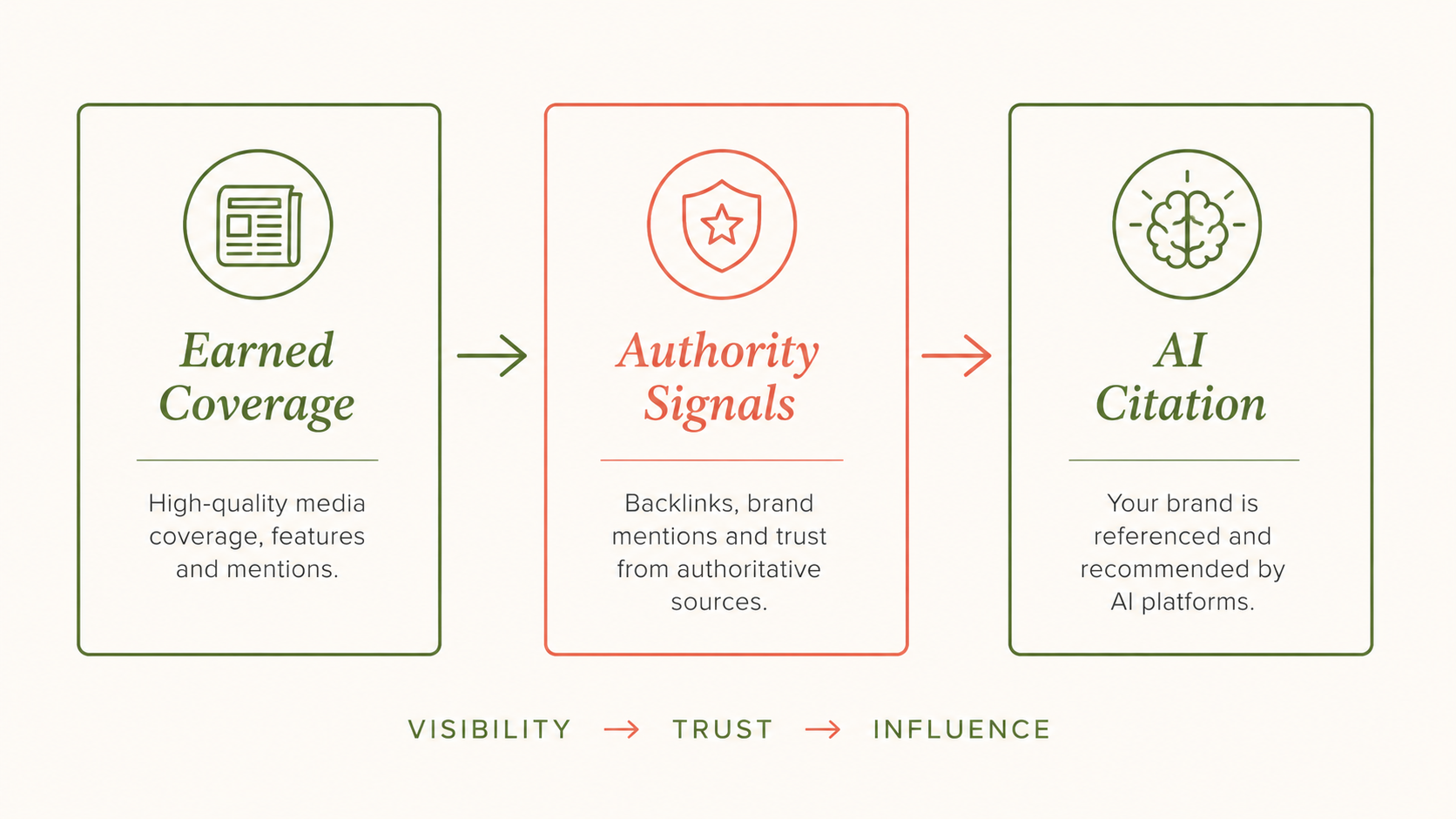
Digital PR and AI search
The same earned coverage that shifts rankings is also what AI tools pull from when they decide what to cite, which is why digital PR now sits at the centre of a wider AI and GEO Strategy.
Why AI search changes the game for PR
The rise of AI-powered search, including Google's AI Overviews, ChatGPT search, Claude, Perplexity and other answer engines, has fundamentally changed what earned coverage needs to achieve. These tools do not simply crawl and rank pages the way traditional search engines do. They synthesise information from multiple sources to generate a single answer, and they tend to draw disproportionately on sources that already carry strong authority signals, meaning frequent citation, consistent brand mentions and coverage from trusted, well-established publications.
The same earned coverage that shifts rankings is also what AI tools pull from when they decide what to cite, which is why digital PR now sits at the centre of a wider AI & GEO Strategy.
This means the objective of digital PR has expanded. It is no longer enough to earn a link that ranks well in traditional search. Coverage now needs to be structured, factually consistent and repeated across enough credible sources that an AI system recognises your brand as a reliable reference point on a given topic.
Read more about how AI is changing PR and content marketing on The Spark.
How AI systems decide what to cite
While the exact mechanics vary between platforms, AI search tools generally favour sources that demonstrate:
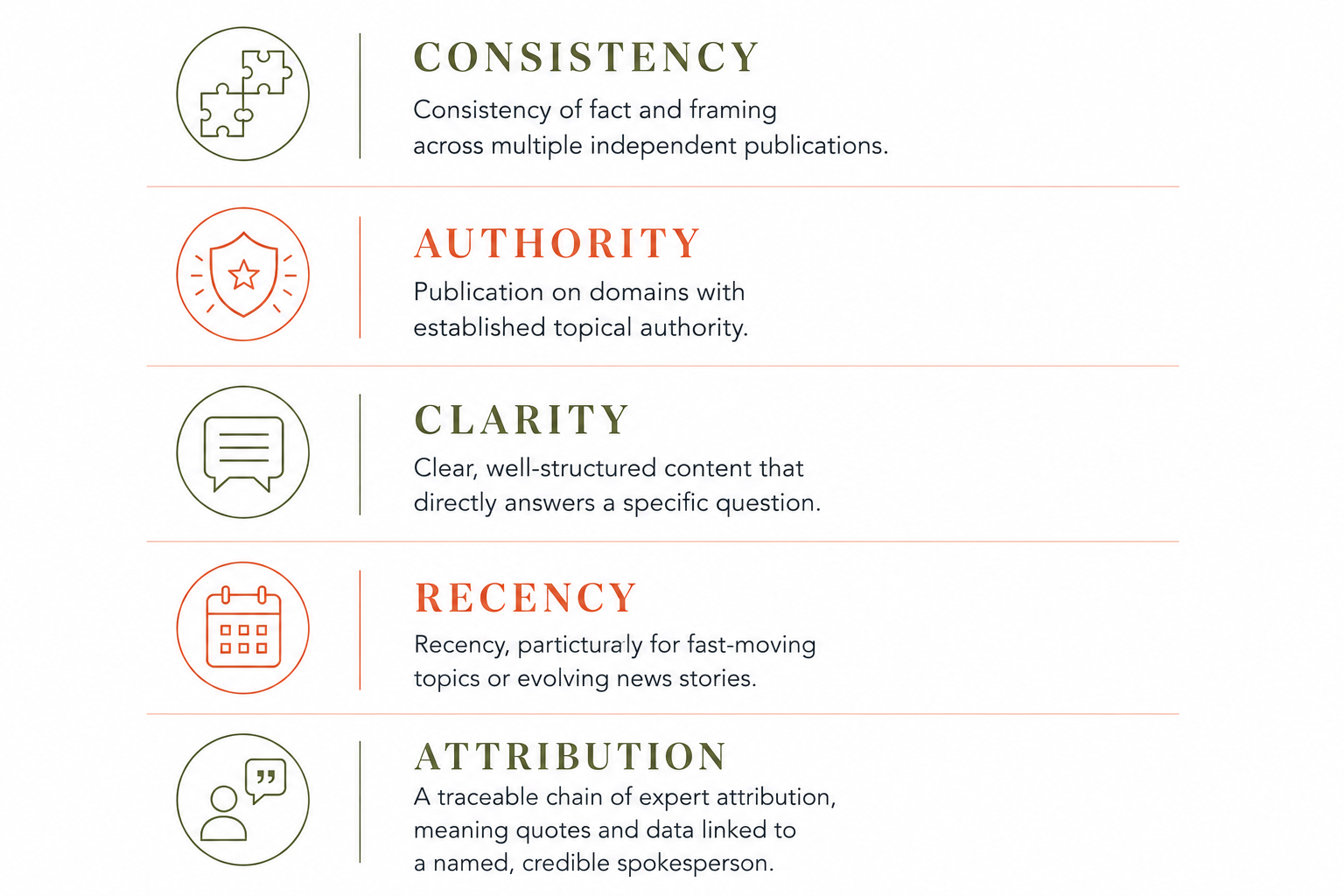
This is precisely why traditional digital PR fundamentals, earning coverage on authoritative sites, securing consistent expert quotes and building a body of citable data, translate so well into AI search performance. A brand that has spent two years building genuine media relationships and earning consistent, accurate coverage has effectively been building an AI search strategy without necessarily calling it that.
Practical steps to optimise digital PR for AI search
For brands and PR teams looking to adapt their strategy, a few practical shifts make a measurable difference
Ensure data and statistics released through PR campaigns are hosted on an accessible, well structured page on your own site, not only distributed to journalists, so AI systems can trace the original source
Keep spokesperson quotes and factual claims consistent across every piece of outreach, since contradictory framing across sources undermines the confidence signals AI systems look for
Prioritise coverage on publications with strong topical authority in your sector over sheer volume of low quality placements
Build a consistent core narrative around key topics so that, over time, your brand becomes a repeated and trusted reference point rather than a single mention
Monitor brand presence in AI search tools directly by testing relevant queries and noting whether and how your brand is cited
The opportunity this creates
For PR professionals, the rise of AI search is not a threat to the discipline; it is validation of what good PR has always been about. Authority, consistency, credibility and earned third-party trust are exactly what these systems are designed to reward. Brands that have underinvested in genuine, relationship-led PR in favour of quick wins are now finding that gap reflected in their absence from AI-generated answers. Those that have built a consistent, well-evidenced media presence are seeing that investment pay off in a new and increasingly important channel.
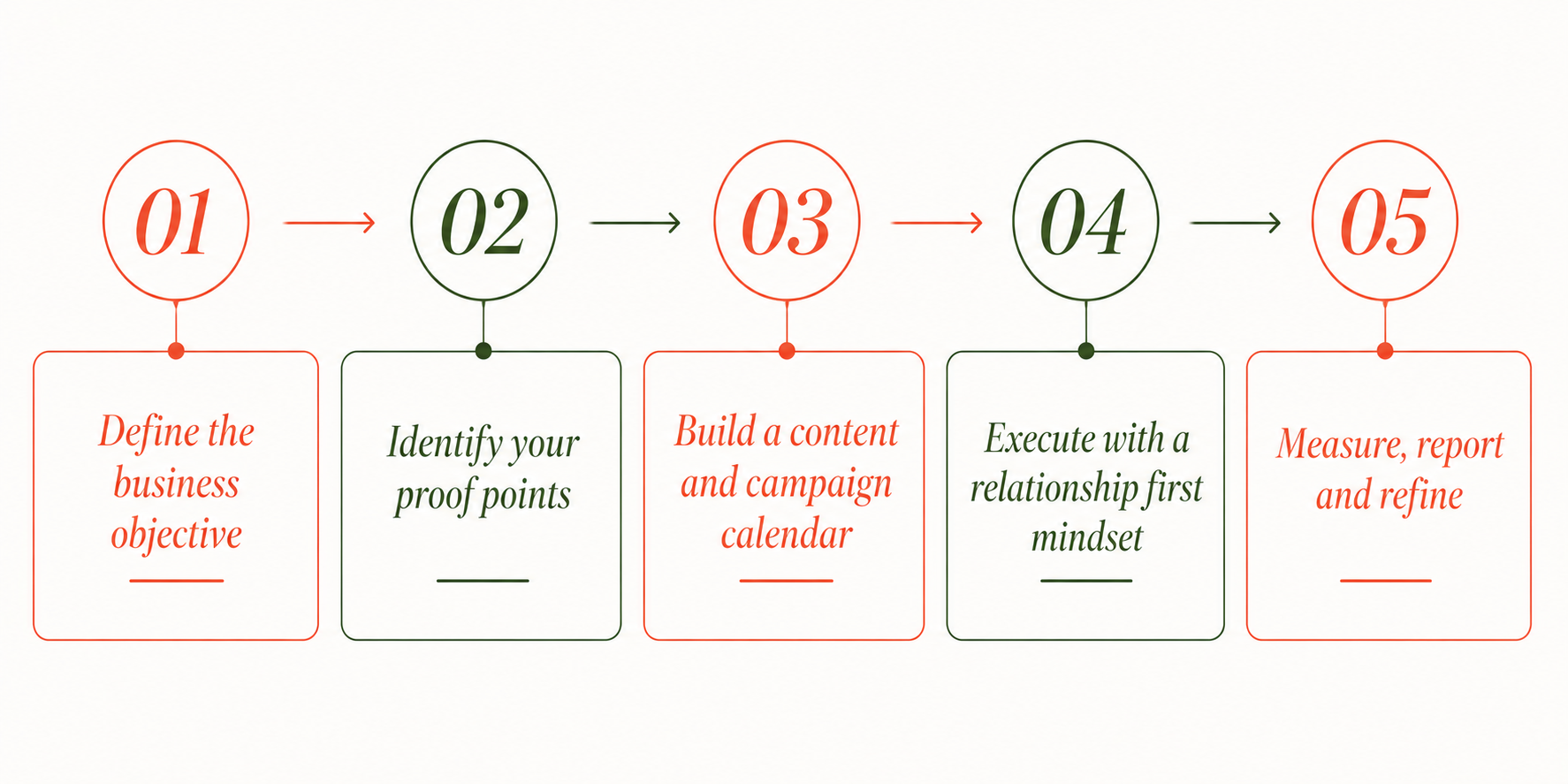
A five-step digital PR strategy framework
Step one: define the business objective
Every campaign should map back to a clear business goal, whether that is improving organic visibility for a specific product category, shifting brand perception, supporting a product launch or establishing a spokesperson as a category authority.
Step two: identify your proof points
What data, insight or expertise does your brand genuinely own that no competitor can claim? This might be proprietary customer data, clinical or technical expertise, or a genuinely differentiated point of view on an industry issue.
Step three: build a content and campaign calendar
Digital PR performs best when it is planned around a mix of always on reactive opportunities and two or three larger flagship campaigns per year, timed to align with seasonal moments, industry events or product milestones.
Step four: execute with a relationship first mindset
Outreach should always be built around genuine relevance to the journalist and their audience, not a generic pitch sent to a long list of contacts.
Step five: measure, report and refine
Report against the metrics that matter to the business, not vanity numbers, and use each campaign's performance to refine the next.
Common digital PR mistakes that cost earned media
Many digital PR campaigns underperform for entirely avoidable reasons. The most common issues include chasing link volume over link quality, which can damage domain trust rather than build it, building campaigns around what is easy to produce internally rather than what a journalist actually wants to cover, inconsistent spokesperson messaging that dilutes authority signals over time, and treating digital PR as a standalone activity rather than integrating it with the wider content, SEO and social strategy.
Read more about how to integrate PR, content and social media on The Spark.
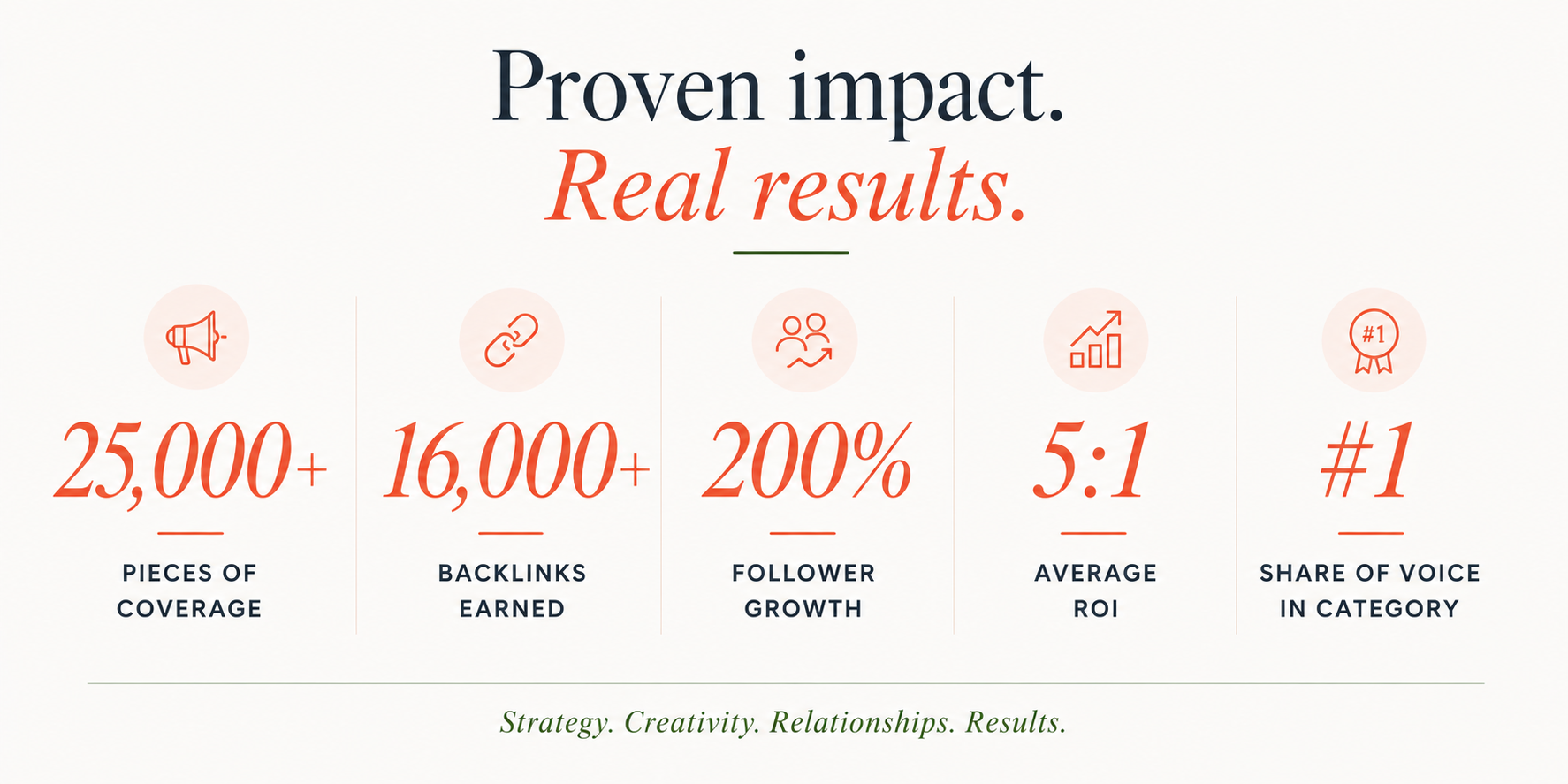
Digital PR results in practice
I've spent close to two decades building and leading digital PR strategies across health, finance and consumer brands, from taking Chemist4U to the number one share of voice position in UK weight loss media, to delivering the influencer-led growth behind myBMI.ie's 200% follower growth and 5:1 return on investment. That experience spans both the agency side, at Weber Shandwick, M&C Saatchi PR and beyond, and in-house leadership roles where digital PR has needed to prove its worth directly against commercial targets.
Building a digital PR strategy that performs across traditional search, brand perception and now AI search requires the same fundamentals it always has: a genuinely strong story, told to the right people, with the discipline to measure what actually matters. The channels evolve. The craft underneath them does not.
Great work starts with a spark. Discover the Spark at www.robbiecentellas.com.

About the author
Robbie Centellas is a senior marketing and communications consultant with almost two decades of experience across PR, digital PR, content, corporate communications and crisis communications. His work includes leading a digital PR programme at RVU delivering 25,000+ pieces of coverage and 16,000+ high-authority backlinks, and developing the Eat Less Move More campaign with Amy Tapper and Fat Tony. Read more about Robbie.
Digital PR Strategy FAQs
-
Working with me means the person who plans your strategy is the same person pitching journalists and reporting on results. There are no account handovers and no junior team learning on your budget. I bring almost two decades of experience across agency and in-house roles, including leading a programme at RVU that delivered more than 25,000 pieces of coverage and over 16,000 high-authority backlinks. A freelance model is also flexible, so I can lead a single campaign, support an in-house team or run an always on programme.
-
Research-led digital PR means every campaign is built on evidence rather than guesswork. I start by mapping the media and audience landscape, analysing where competitors earn coverage and identifying the data or insight a brand owns. That might be a bespoke survey, analysis of public datasets or proprietary customer data. The result is a story journalists want to cover, earned media that builds search authority, and original research that AI search tools can trace back to your brand.
-
Digital PR uses the same relationship building and storytelling skills as traditional PR but is built specifically to perform in a digital ecosystem. Where traditional PR measured success through column inches and Advertising Value Equivalent, digital PR is judged on backlinks, referring domains, organic traffic and now, citation in AI generated search results.
-
Reactive PR and expert commentary can generate coverage within days, but a proper digital PR strategy is a long-term investment. Most brands start seeing meaningful organic search impact from sustained digital PR activity within three to six months, with authority and AI search presence building steadily over twelve months and beyond.
-
The strongest campaigns combine a genuinely newsworthy hook, whether that is proprietary data, an emotive human story or a useful interactive tool, with disciplined outreach to journalists who actually cover that beat. Campaigns built around what is easy to produce rather than what a journalist wants to cover tend to underperform regardless of budget.
-
AI search tools like Google AI Overviews, ChatGPT search and Perplexity draw disproportionately on sources with strong authority signals, meaning consistent brand mentions, frequent citation and coverage across trusted, well-established publications. This is exactly what a well-executed digital PR strategy builds, so brands with a strong earned media history tend to already have a head start in AI search visibility.
-
I track referring domains and domain authority, share of voice against named competitors, referral traffic and conversion, sentiment of coverage rather than just volume, keyword ranking movement, and increasingly, brand mention frequency in AI-generated answers.
-
Yes, and often more effectively than for established brands, since digital PR rewards genuinely differentiated stories rather than sheer marketing budget. A smaller brand with a strong data story or a distinctive point of view can outperform a much larger competitor with a generic press office approach.