
Earned Media Brand Building
Freelance Brand Building Consultant: authority built through earned media
I'm Robbie Centellas, a freelance brand building consultant based in London. I help organisations build reputation and authority through earned media, so independent sources, not just owned channels, do the talking.
At RVU I led a digital PR programme that delivered more than 25,000 pieces of coverage and over 16,000 high-authority backlinks across Uswitch.com, Confused.com and money.co.uk, and took Chemist4U to number one share of voice in UK consumer media.
Explore the freelance brand building services I offer.
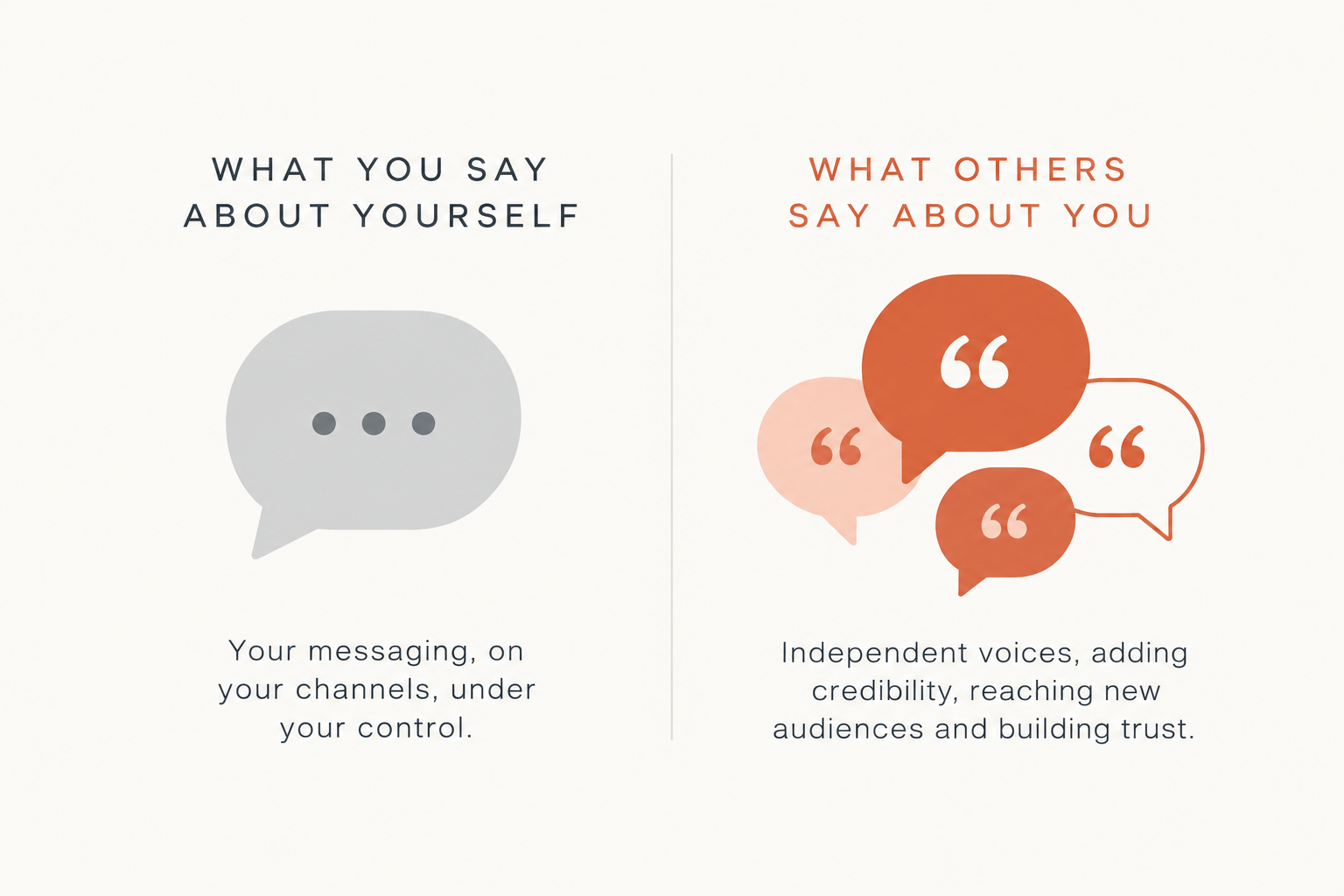
Why the strongest brands are built by what others say about you, not just what you say about yourself
Brand building is often treated as a design and messaging exercise, a logo, a tone of voice document, a campaign tagline. Those things matter, but they are not what actually builds trust. Trust is built by third parties, journalists, industry commentators, customers and increasingly, AI systems synthesising what is said about a brand across the web, repeating a consistent, credible story often enough that it becomes the accepted truth about who an organisation is.
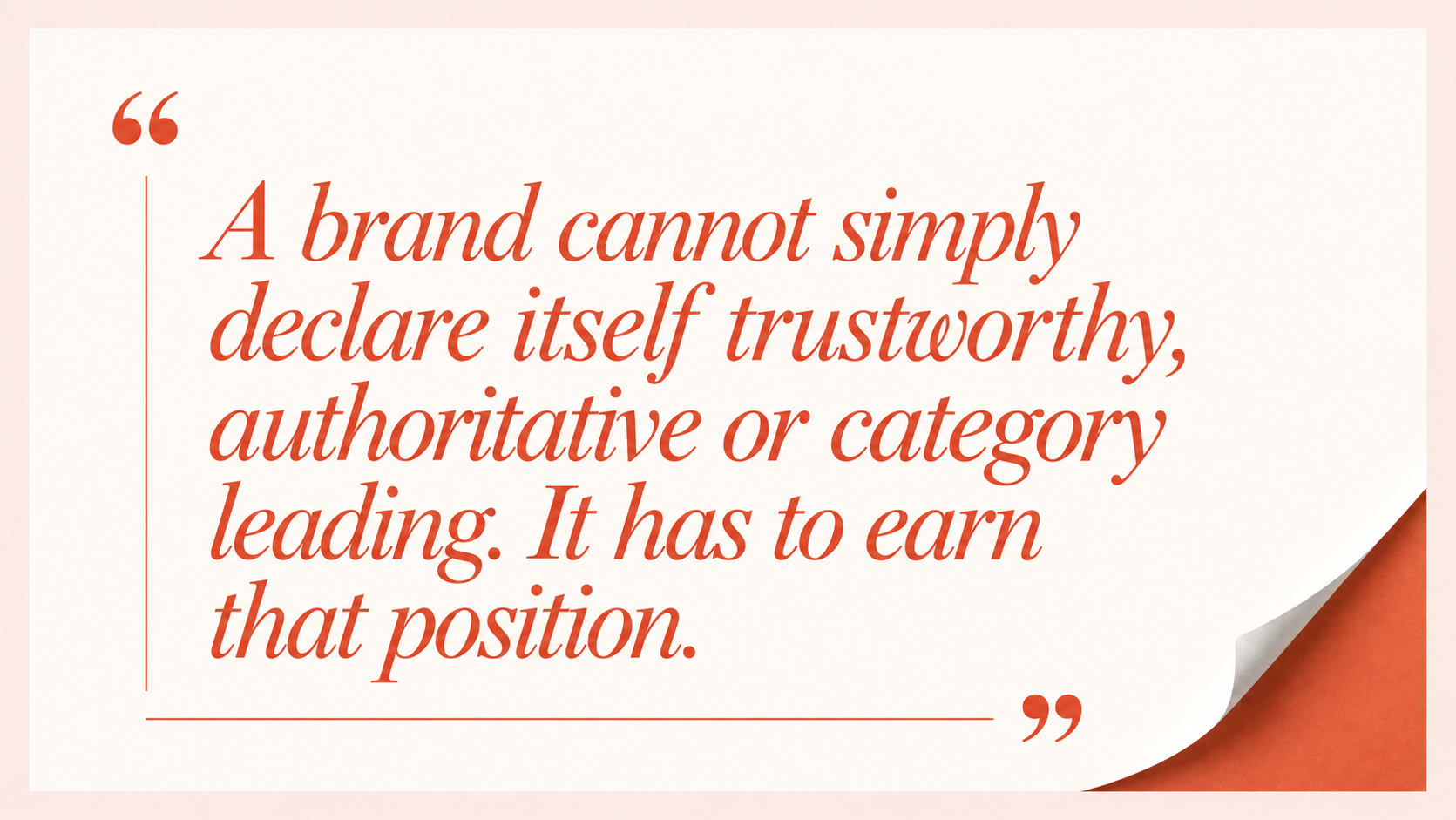
This is the space PR has always occupied, and it is why earned media remains one of the most powerful, and most underused, tools in brand building. A brand cannot simply declare itself trustworthy, authoritative or category leading. It has to earn that position through consistent, credible third party coverage, built deliberately over time rather than claimed in a single campaign moment.
I've built brand presence for organisations at very different starting points, taking Chemist4U from limited national recognition to the number one share of voice in UK health media, and helping money.co.uk establish credibility as a challenger brand against far larger competitors in personal finance. In both cases, earned media was not a supporting activity alongside brand building, it was the primary mechanism through which the brand was built.
What brand building through earned media actually covers
Brand building through PR is the discipline of using earned coverage, spokesperson visibility, strategic campaigns and consistent media narrative to build a brand's reputation, authority and recognition, rather than relying solely on owned advertising or a static identity system to do that work.
The core components include:
Narrative development, defining the story a brand wants the media and public to tell about it, and building every piece of PR activity to reinforce that story consistently
Third party validation, earning coverage, quotes and endorsements from credible, independent sources that a brand cannot manufacture on its own channels
Executive and spokesperson visibility, positioning leadership as credible voices whose media presence builds brand authority directly
Campaign brand moments, building specific campaigns designed to create a cultural moment that shifts perception at scale
Message consistency across coverage, ensuring the brand's core narrative holds steady across every journalist interaction, every piece of coverage and every spokesperson quote
Reputation monitoring and protection, tracking how the brand is currently discussed and addressing gaps or inaccuracies before they become entrenched
The core pillars of brand building with PR
Narrative development
Every strong brand needs a clear story, not a slogan, but a genuine point of view on why it exists and what it stands for, told consistently enough over time that it becomes the accepted narrative. This narrative needs to be distinctive enough to earn coverage, since journalists are drawn to a real point of view, not a generic corporate message, and specific enough that every subsequent piece of PR activity has something clear to reinforce.
Building this narrative requires understanding not just what a brand wants to say, but what story journalists and audiences will actually find worth telling, which often means finding the more human, specific angle within a broader corporate story.
Third party validation
A backlink, a quote or a feature in a trusted publication carries a kind of credibility a brand cannot generate through its own channels, however well produced the content is. This is the core value earned media brings to brand building, an independent, credible source vouching for the brand, which builds trust with human audiences and, increasingly, sends the kind of authority signal that AI systems weight heavily when deciding what to cite.
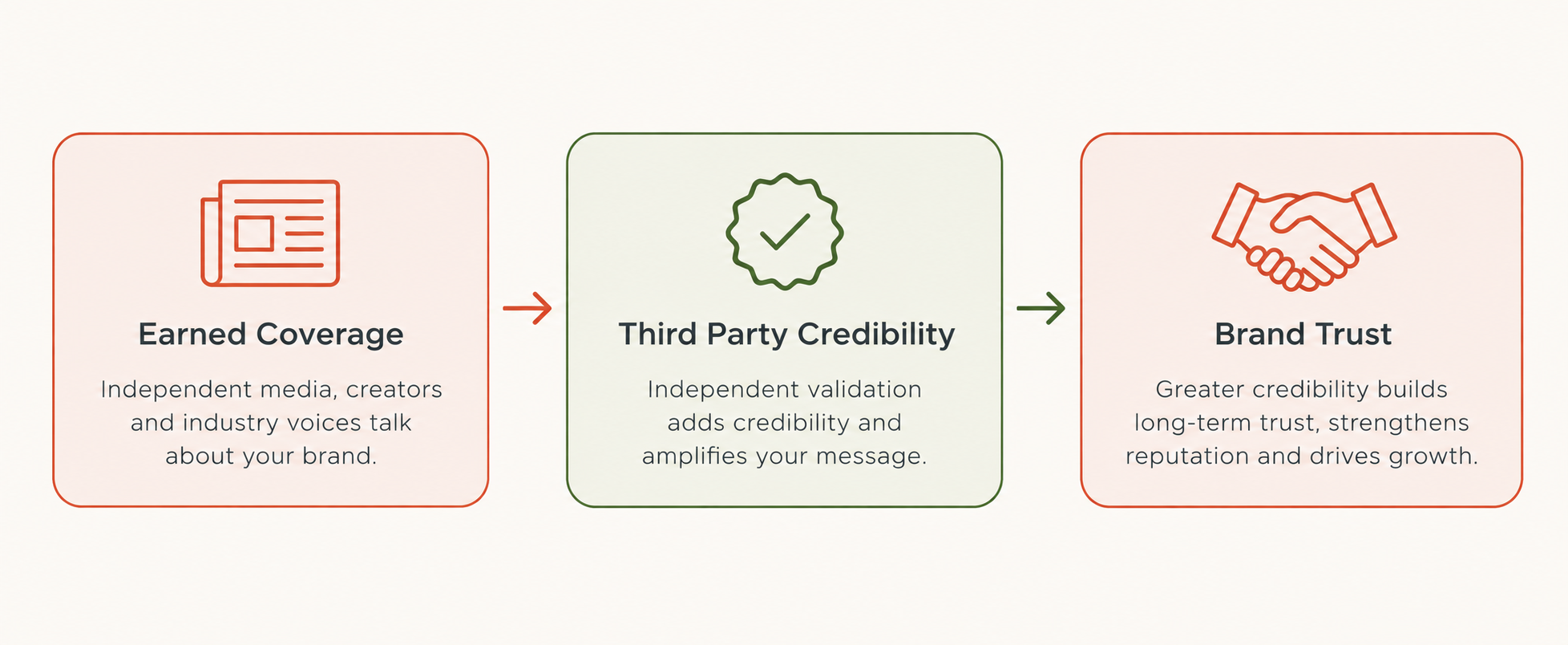
Building this validation at scale requires the same fundamentals as any strong digital PR programme, genuine relationships with journalists, a steady supply of genuinely newsworthy stories, and the discipline to keep pitching even when a story does not land the first time.
Executive and spokesperson visibility
A brand is often judged by how its leaders show up publicly. A credible, well-prepared spokesperson builds brand authority directly, through interviews, bylines, panel appearances and expert commentary, in a way that owned content alone cannot replicate. This visibility needs to be built deliberately, through media training, message discipline and a genuine point of view, rather than treated as an occasional add-on when a journalist happens to ask for comment.
Campaign led brand moments
While consistent, ongoing PR activity builds the foundation of a brand over time, specific campaigns can create a genuine step change in recognition and perception when they land well. The Eat Less Move More campaign for Chemist4U, developed and led in partnership with Amy Tapper, star of Gogglebox, and DJ and advocate Fat Tony, is a clear example, a single, well executed campaign that shifted the brand's position in UK weight loss media conversation almost overnight, achieving the number one share of voice and driving real commercial impact well beyond the campaign's immediate news cycle.
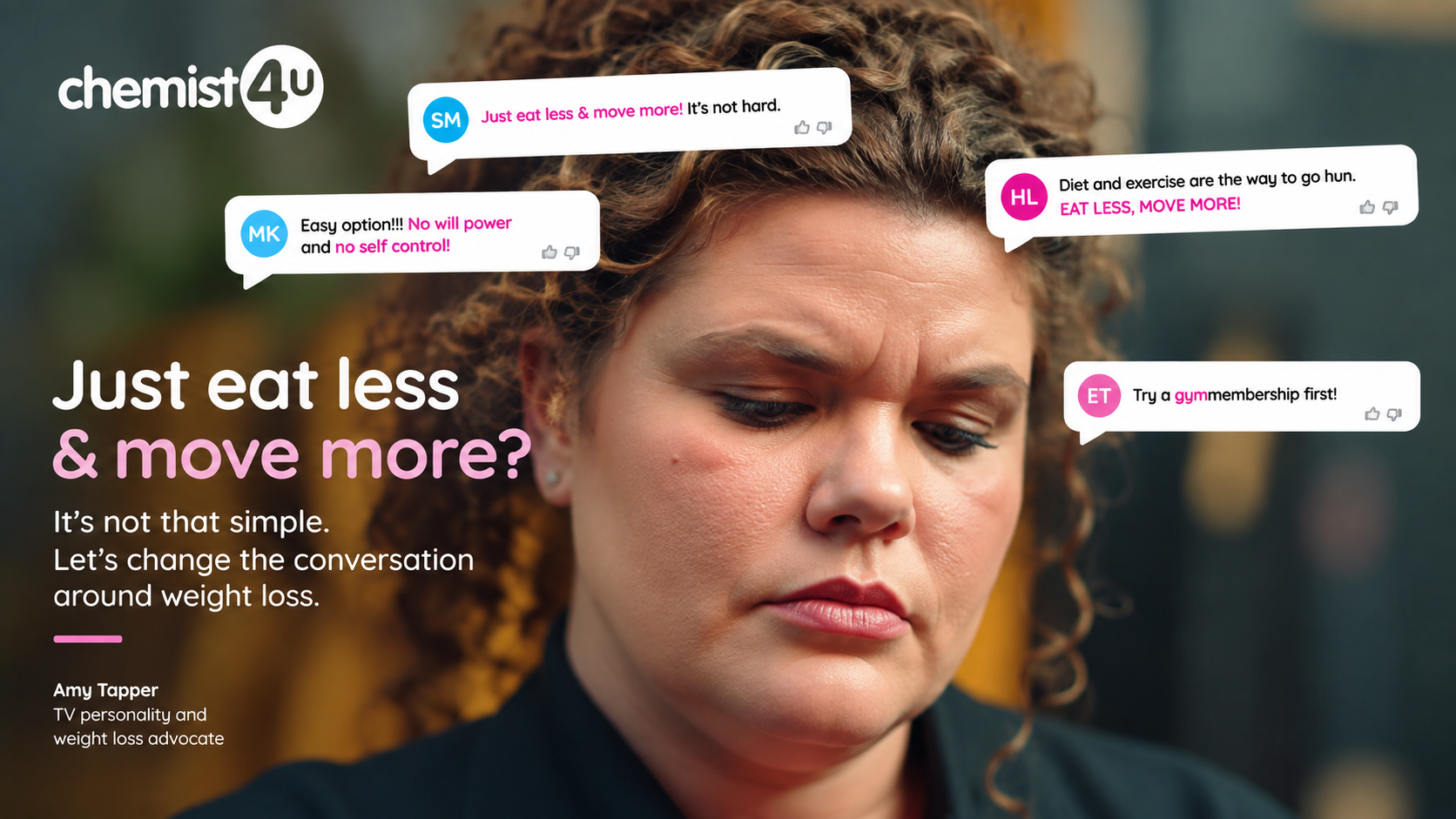
These moments work best when they connect to the brand's underlying narrative rather than existing as a one off stunt disconnected from everything else the brand says and does.
Message consistency across coverage
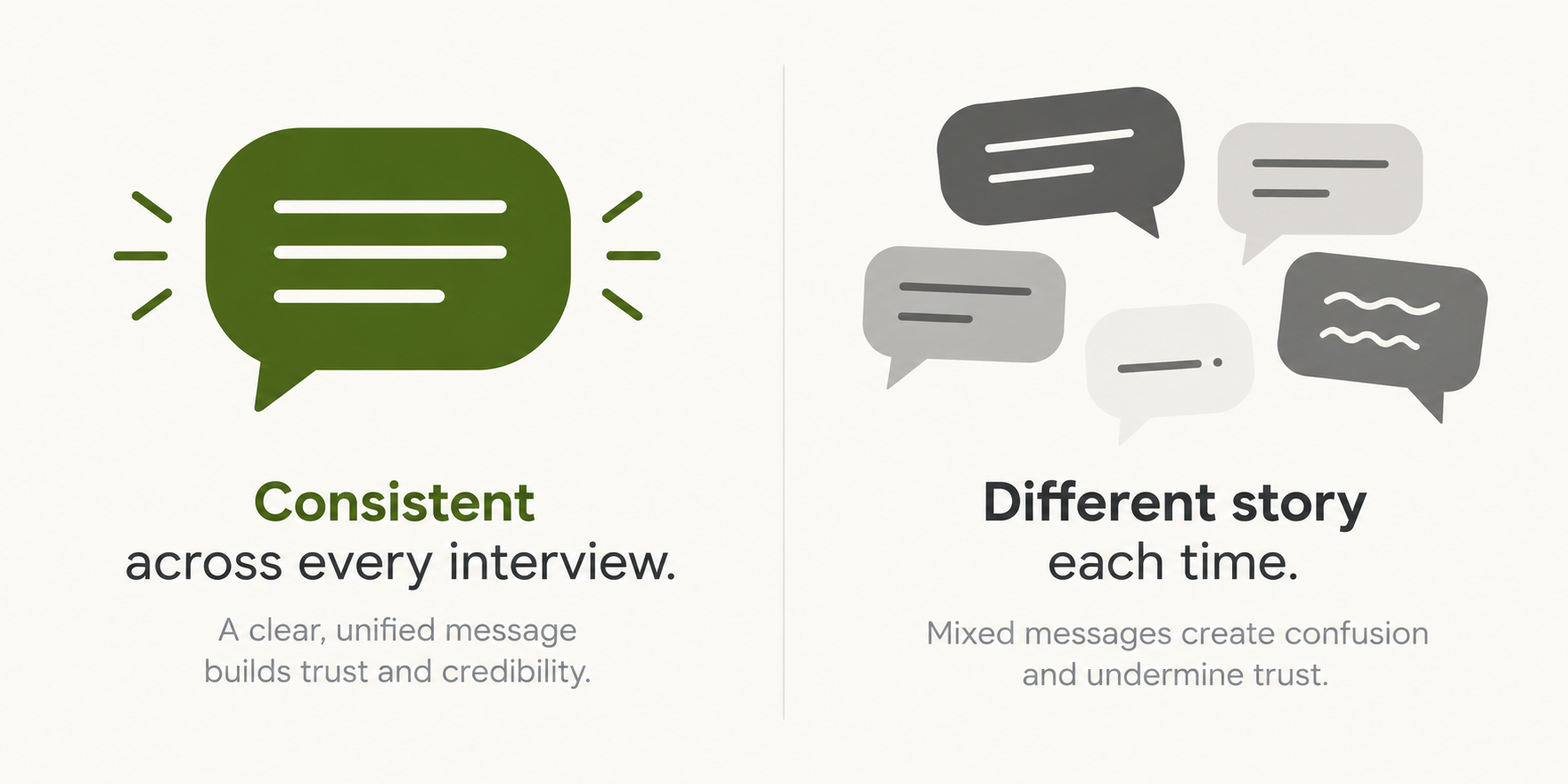
A brand's reputation is built cumulatively, across dozens or hundreds of individual pieces of coverage over time, which means consistency matters enormously. If a spokesperson describes the brand's positioning differently in every interview, or if messaging shifts noticeably between campaigns, the accumulated narrative becomes muddled rather than reinforcing, and both human audiences and AI systems synthesising that coverage struggle to form a clear, confident picture of what the brand actually stands for.
Reputation monitoring and protection
Brand building through earned media is not just about generating new coverage; it is about actively managing the coverage that already exists. This means monitoring how the brand is currently discussed across media and social platforms, addressing inaccuracies or outdated narratives before they become entrenched, and ensuring that older, less favourable coverage is counterbalanced by a steady stream of more recent, more accurate stories.
Brand building, earned media and AI search
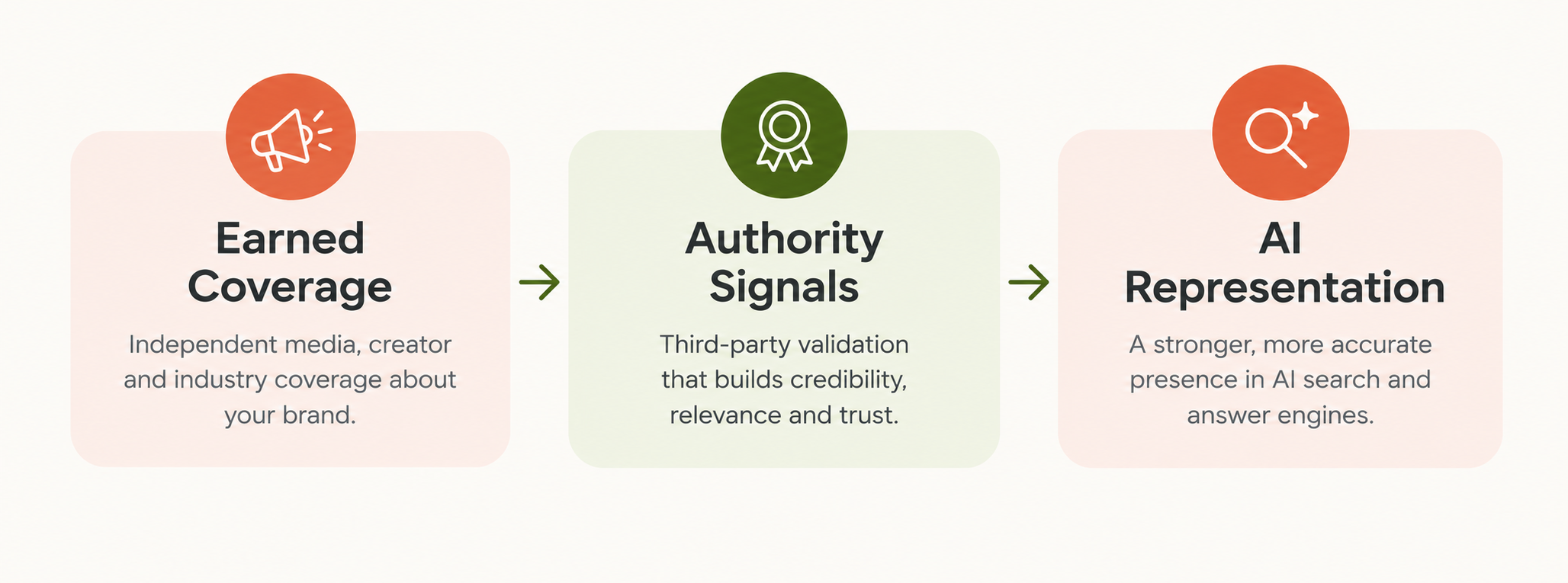
The same third party validation that builds trust with people is what AI tools look for when deciding who to cite, so earned media and AI and GEO Strategy increasingly go hand in hand.
Why earned media matters more, not less, for AI search visibility
AI-powered search and answer engines, including Google's AI Overviews, ChatGPT search and Perplexity, build their picture of a brand from the sources available across the web, and they favour sources with strong authority signals, meaning consistent, credible coverage across trusted, independent publications. This is precisely what earned media has always been built to deliver, and it means a brand's PR history is now doing double duty, building human trust and shaping how AI systems represent that brand to anyone who asks.
Brands that have relied primarily on owned content and advertising, without a meaningful earned media presence, are finding a real gap in how AI systems represent them, simply because there is less independent, credible third-party content for those systems to draw from.
What this means for brand building strategy
The practical implication is that PR and earned media deserve a more central role in brand building strategy than they are often given credit for, not as a supporting activity that runs alongside the "real" brand work of design and messaging, but as one of the primary mechanisms through which a brand becomes durably, credibly recognised, both by people and by the AI systems increasingly mediating how those people discover information.
Practical steps to optimise digital PR for AI search
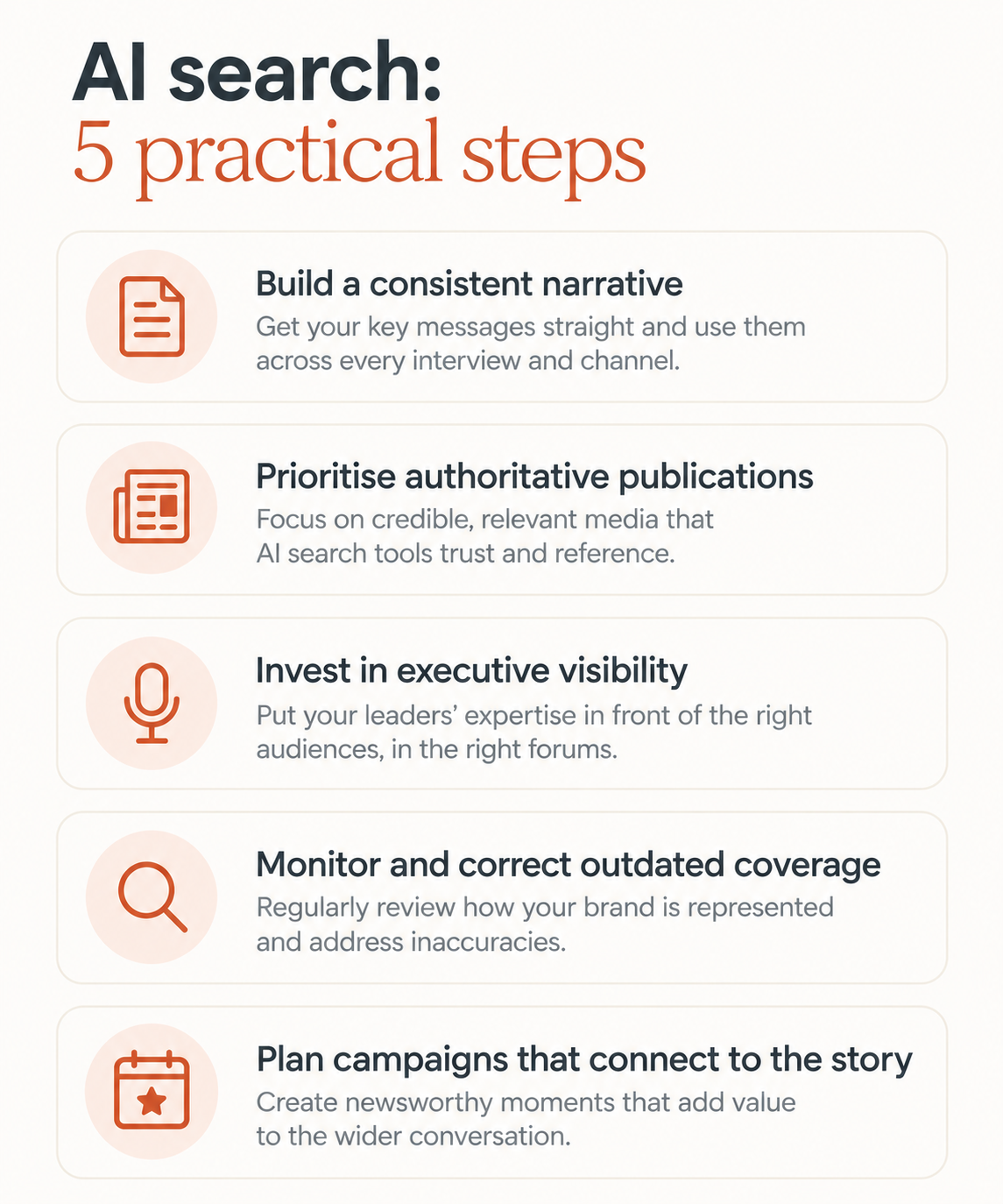
Build a consistent narrative and keep every piece of spokesperson commentary and campaign activity aligned to it, since consistency across coverage is what compounds into recognisable brand authority over time
Prioritise coverage on publications with genuine topical authority in your sector, since this is what both human audiences and AI systems weight most heavily
Invest in executive visibility as a brand building tool in its own right, not simply a reactive PR activity
Monitor and correct outdated or inaccurate coverage actively, since AI systems can resurface older content without clear time weighting
Treat major campaigns as opportunities to create a step change in brand narrative, but only when they connect clearly to the broader story the brand is consistently telling
The opportunity this creates
For brands willing to invest in earned media as a genuine, ongoing discipline rather than an occasional press release, this shift rewards exactly the kind of work PR has always been built to do, earning credible, independent validation that compounds into lasting authority. As AI search increasingly shapes first impressions, the brands with a strong, consistent earned media history are simply better positioned, and the brands without one have a real gap to close.
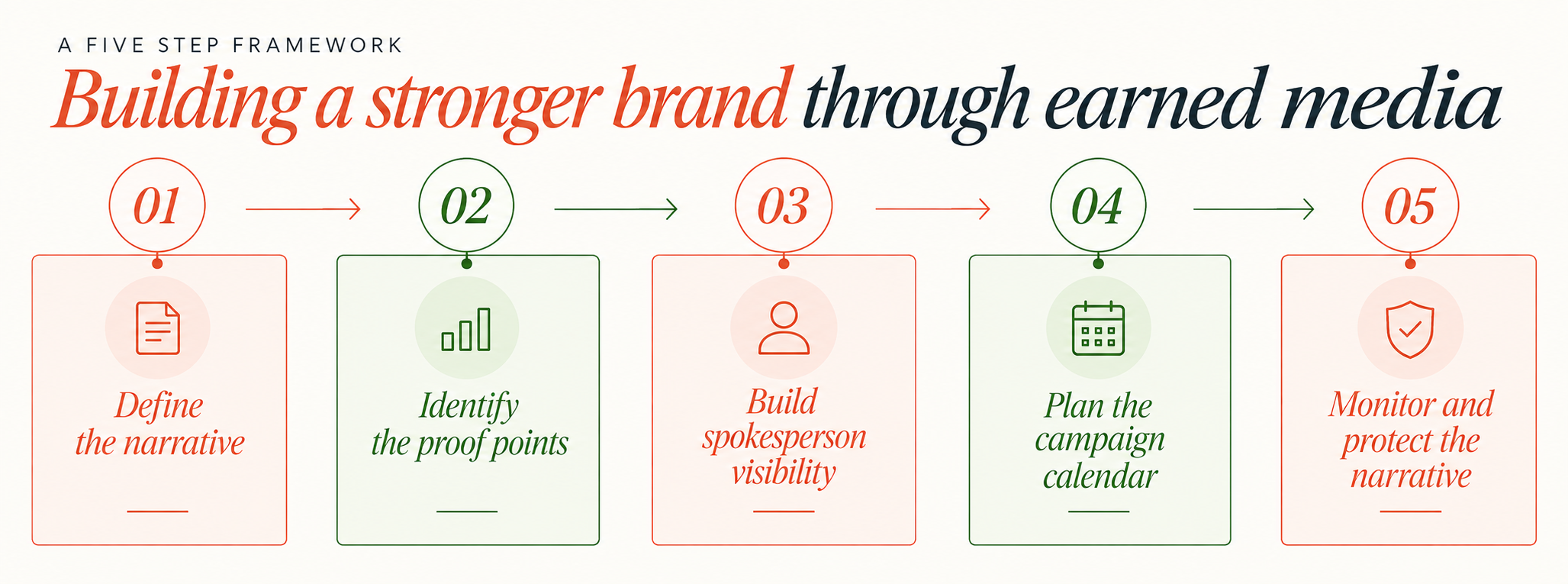
Building your PR led brand strategy: a practical framework
Step one: define the narrative
Establish the clear, distinctive story the brand wants told, specific enough to earn genuine coverage rather than generic enough to be ignored.
Step two: identify the proof points
Determine what data, expertise or genuine point of view the brand can offer that will make journalists want to tell that story.
Step three: build spokesperson visibility
Invest in media training and message discipline for key spokespeople, treating executive visibility as core brand infrastructure rather than an occasional extra.
Step four: plan the campaign calendar
Balance always-on reactive PR with one or two larger campaigns designed to create a genuine step change in brand recognition when the moment is right.
Step five: monitor and protect the narrative
Track how the brand is currently represented across media, social and AI search tools, correcting gaps or inaccuracies as part of an ongoing, not occasional, process.
Common pitfalls in PR led brand building
The most common failure point is treating PR as a tactical, campaign by campaign activity rather than a sustained brand building discipline, resulting in coverage that generates short term attention without building any lasting narrative. Other recurring issues include inconsistent spokesperson messaging that dilutes the brand's story over time, under investing in executive visibility until a crisis or opportunity makes the gap visible, and failing to monitor or correct outdated coverage, allowing an old or inaccurate narrative to persist well after the brand has moved on.
How this comes together in practice
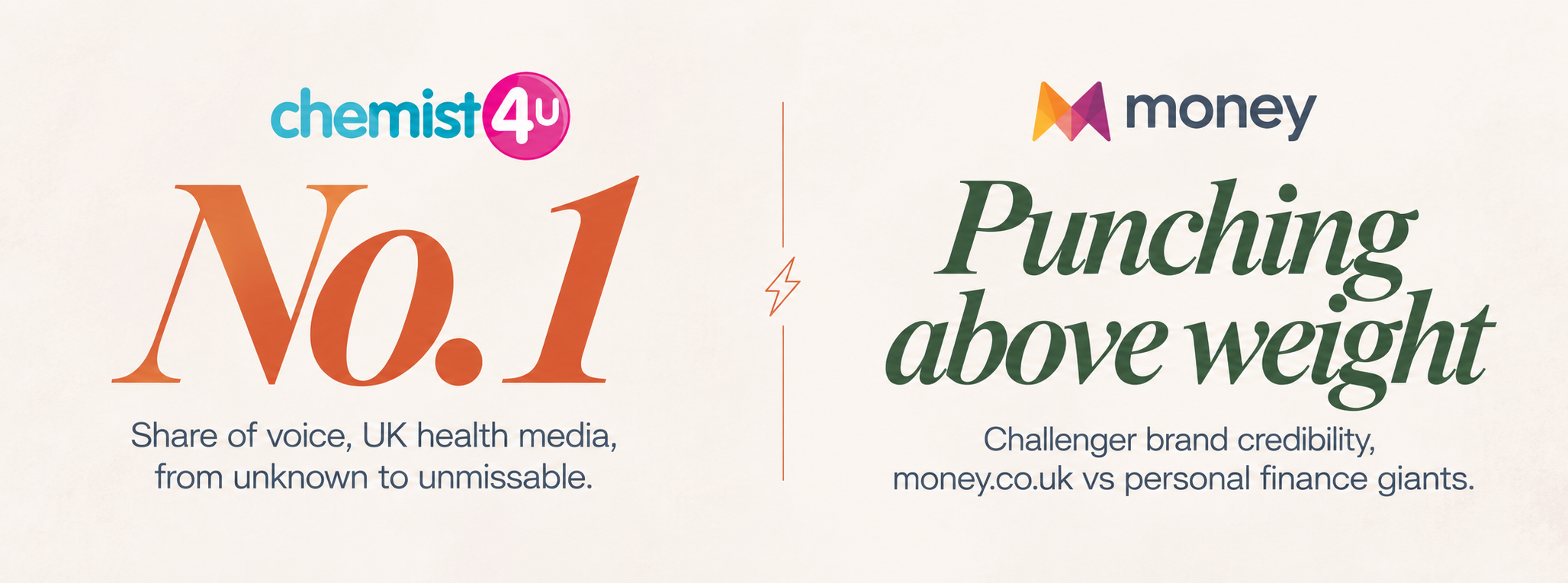
I've built brand authority for organisations through earned media at very different scales, taking Chemist4U from limited national recognition to the number one share of voice in UK health media through sustained PR and the Eat Less Move More campaign, and helping money.co.uk build credibility as a challenger brand in personal finance through a consistent thought leadership and media relations programme rather than relying on advertising spend alone to compete with larger rivals.
Brand building has always ultimately depended on what others are willing to say about you, and that has never been something a brand can simply produce internally. It has to be earned, consistently, over time, through the kind of PR discipline that builds real, lasting authority rather than a single moment of attention.
Great work starts with a spark. Discover the Spark at www.robbiecentellas.com.
About the author
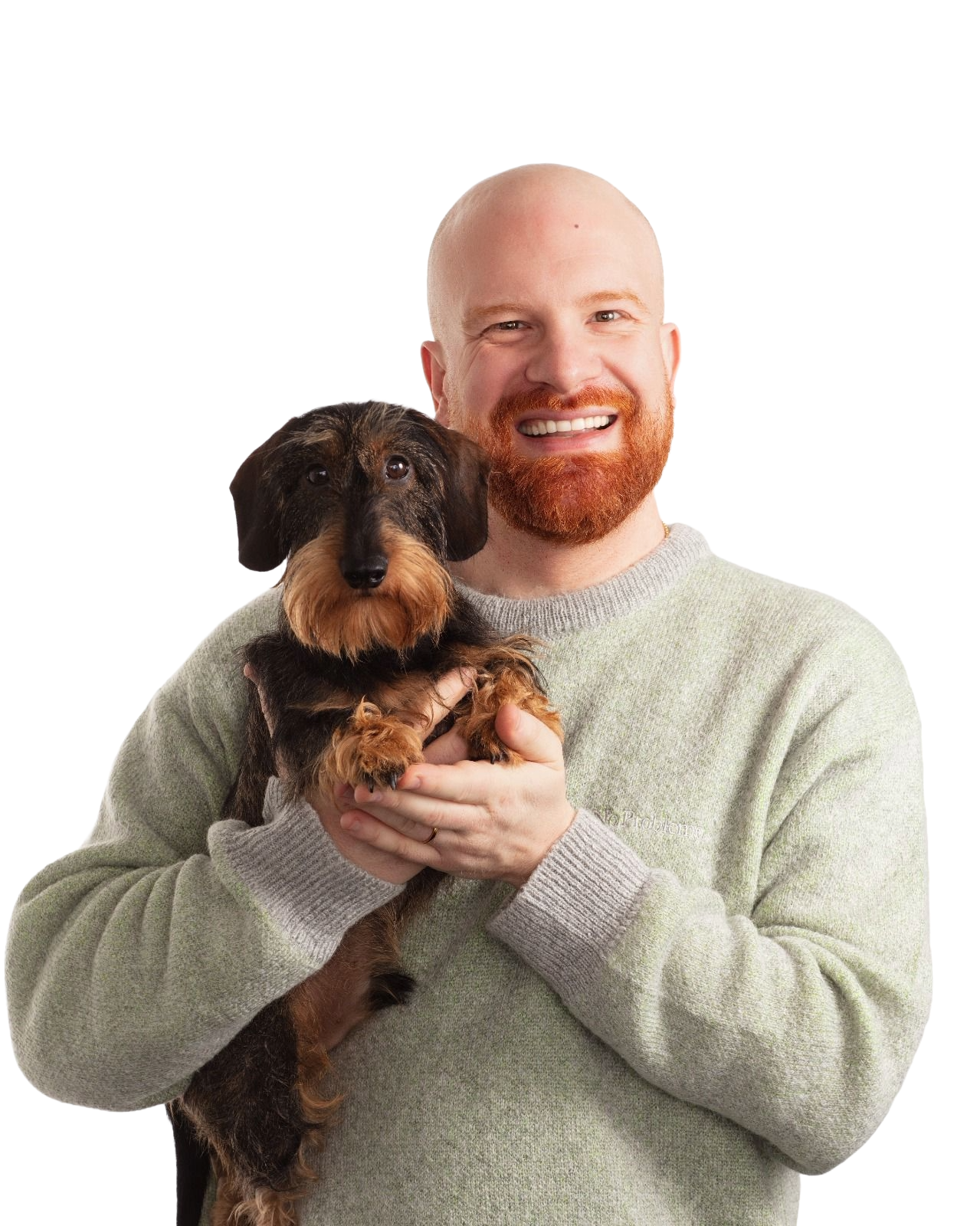
Robbie Centellas is a senior marketing and communications consultant with almost two decades of experience across PR, digital PR, content, corporate communications and crisis communications. His work includes leading a digital PR programme at RVU delivering 25,000+ pieces of coverage and 16,000+ high-authority backlinks, and developing the Eat Less Move More campaign with Amy Tapper and Fat Tony. Read more about Robbie.
Brand Building Through Earned Media FAQs
-
Design and advertising are things a brand controls and produces itself. PR and earned media work differently, they build trust through independent, third-party validation a brand cannot manufacture on its own channels. Both matter, but earned media tends to build deeper, more durable credibility since audiences trust what others say about a brand more than what it says about itself.
-
Meaningful brand recognition through PR is a sustained effort, not a single campaign. Most organisations see a real shift in brand perception after six to twelve months of consistent, well targeted media activity, with a strong flagship campaign able to accelerate that timeline significantly if it lands well.
-
A narrative needs to be distinctive and specific enough that journalists find it worth covering, not a generic corporate message. The strongest brand narratives usually come from finding the more human, specific angle within a broader story, real patient experiences rather than abstract health claims, for example.
-
A brand is often judged by how its leaders show up publicly. A credible, well prepared spokesperson builds brand authority directly through interviews, commentary and thought leadership, in a way owned content alone struggles to replicate. This visibility needs deliberate investment, not just reactive comment when a journalist happens to ask.
-
AI search tools build their picture of a brand from sources across the web, and they favour consistent, credible coverage from independent, trusted publications, exactly what earned media has always been built to deliver. Brands with a strong PR history are increasingly well positioned in AI-generated summaries, while brands relying only on owned content and advertising have a real gap to close.
-
Both matter, but they play different roles. Constant, consistent PR activity builds the foundation of brand trust over time. A well executed, well timed campaign, like Eat Less Move More for Chemist4U, can then create a genuine step change in recognition on top of that foundation, provided it connects clearly to the brand's existing narrative rather than existing as a disconnected stunt.