
AI Search and GEO Strategy
AI search and brand discoverability: getting brands into the answers
AI search is changing how people discover brands. I'm Robbie Centellas, a London based marketing and communications consultant. I help organisations build the content, earned authority and digital footprint they need to appear in Google AI Overviews, ChatGPT, Perplexity and other answer engines.
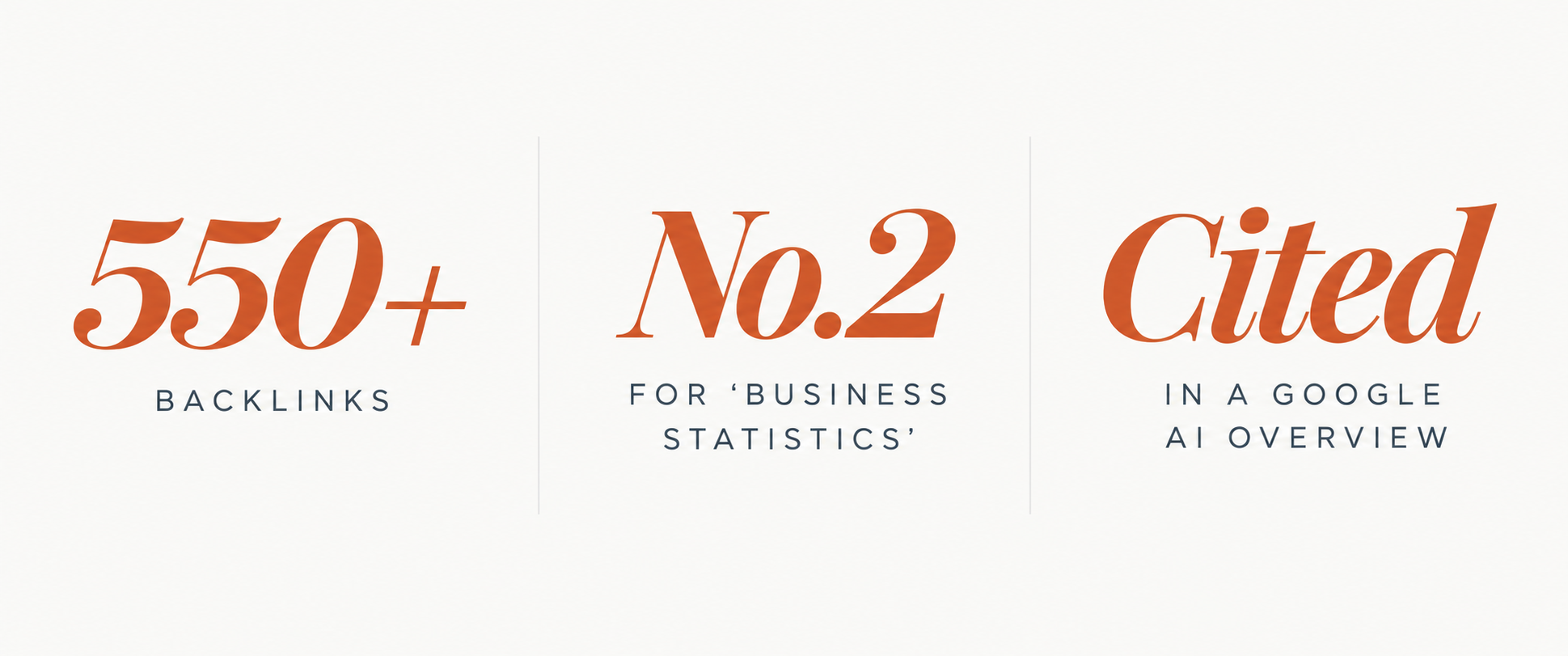
I developed the strategy behind money.co.uk's business statistics page, which has earned more than 550 backlinks, ranks second on Google for "business statistics" ahead of the ONS and GOV.UK, and has been cited in a Google AI Overview. At RVU, I led a digital PR programme that delivered more than 25,000 pieces of coverage and over 16,000 high-authority backlinks across Uswitch.com, Confused.com and money.co.uk.
SEO vs GEO: what's the difference?
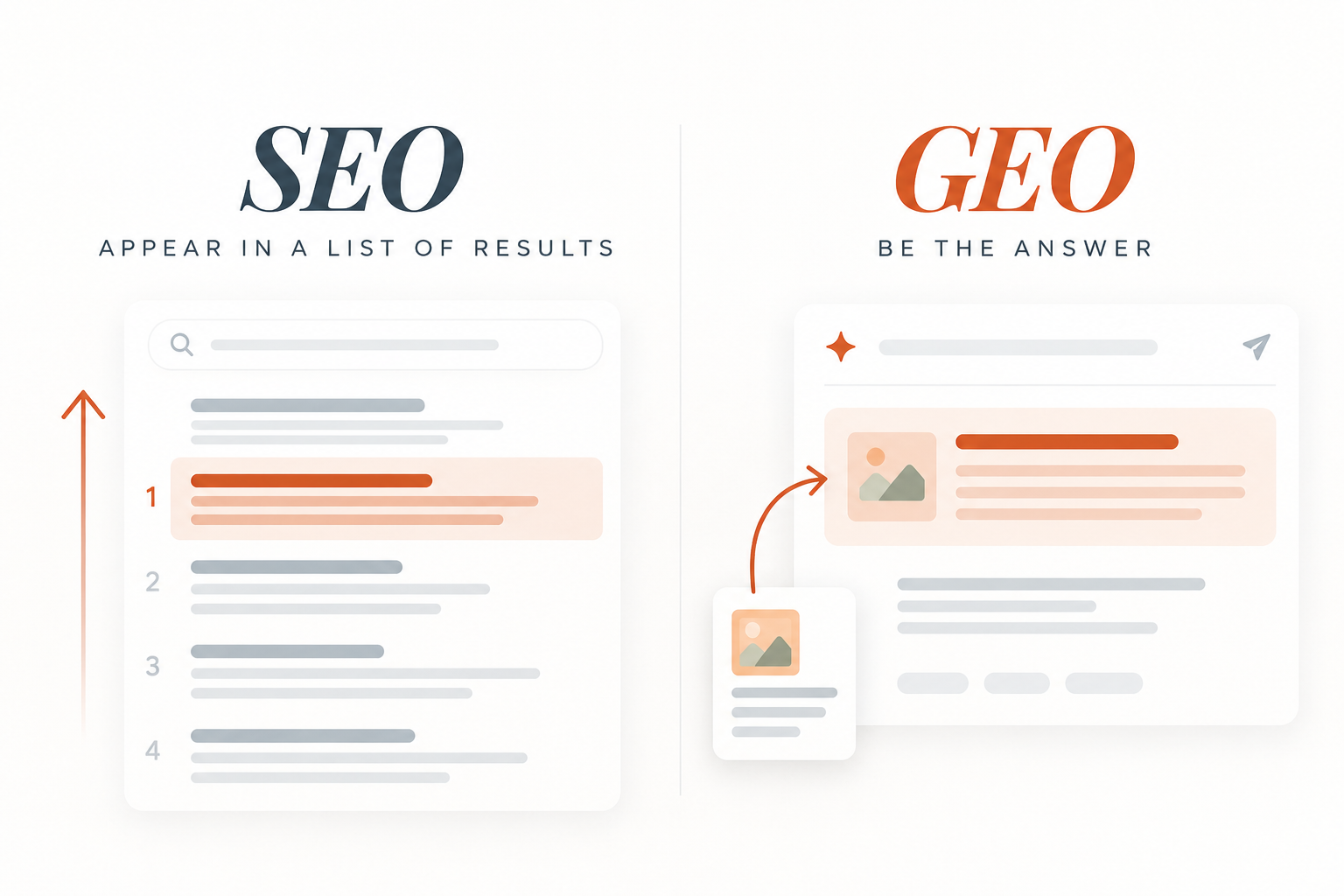
SEO gets a page to rank. GEO, or generative engine optimisation, gets a brand mentioned inside an AI answer.
They overlap, but they reward different things. SEO cares about keywords, links and how a page is built. GEO cares about whether an AI tool has enough consistent, credible information about your brand to describe it with confidence. You can rank on page one and still never appear in an AI Overview or a ChatGPT answer.
That matters, because fewer people are clicking through. US Google users who saw an AI summary clicked a traditional search result in 8% of visits, compared with 15% when there was no summary (Pew Research Center, 2025). If the answer is on the page, being named in it matters more than ranking underneath it.
SEO isn't dead. It's now one part of a bigger picture that includes earned media, content and what other people say about you. I've written more about this shift in why PR is the new SEO.
How do AI tools find and describe brands?
AI tools build answers from two places: what they learned in training, and what they pull from the web in real time when a question needs something current.
Either way, your website is only part of the story. AI tools lean heavily on third party sources when they describe a brand. Across more than 25 million links cited by ChatGPT, Claude and Gemini, 84% came from earned media and just 0.3% from paid or advertorial content (Muck Rack, 2026). I break down what that means for PR teams in the 84% stat every PR needs to know in 2026.
So a brand becomes visible to AI much the way it becomes trusted by a journalist: by being mentioned consistently, in the right places, by sources people already trust.
Earned media and AI citations
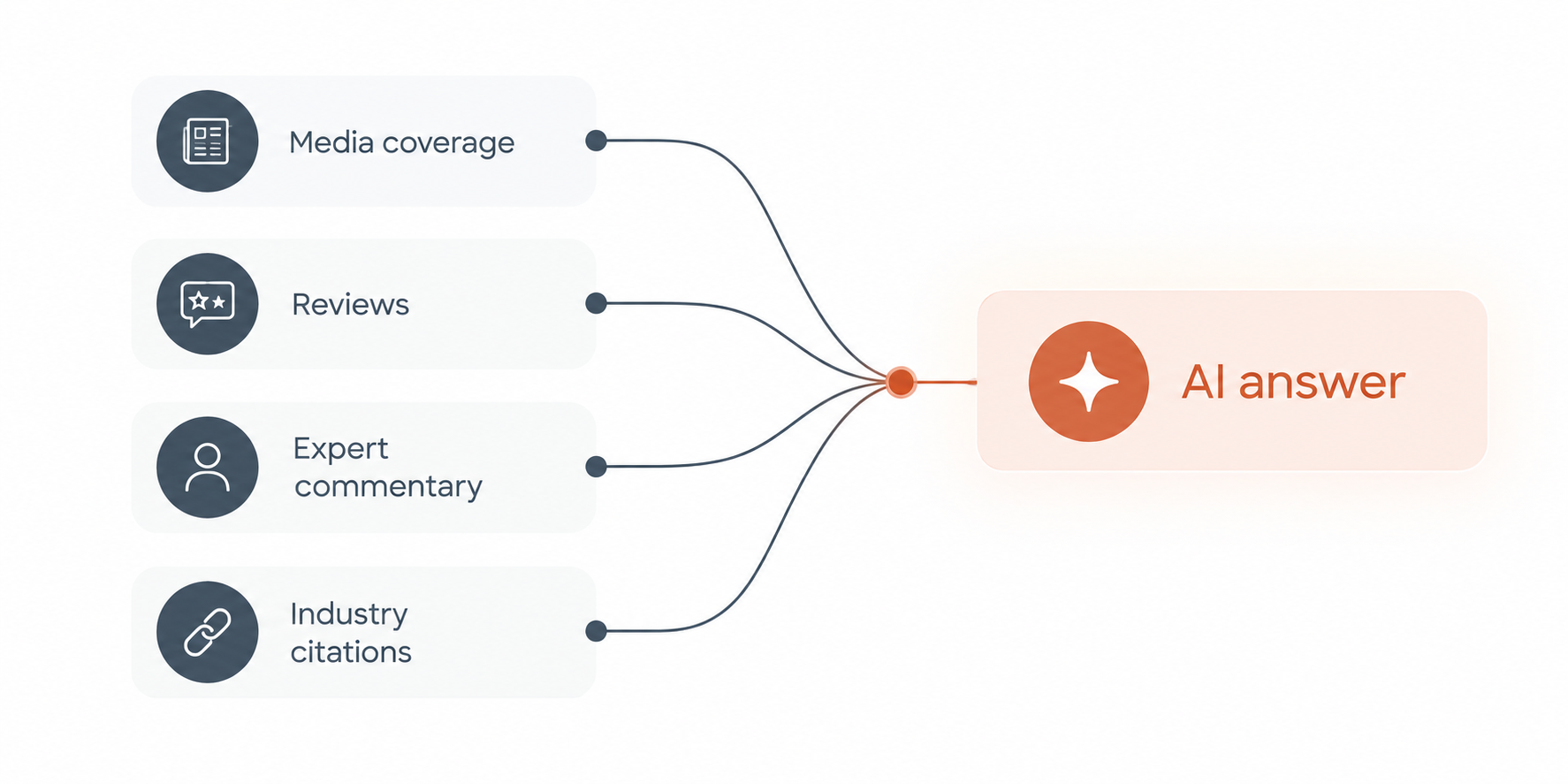
Earned media is what AI answers are built from. When someone asks about a category, a product or a company, AI tools pull from news coverage, expert comment, reviews and trade press, not adverts.
That changes what a piece of coverage is worth. I've written more about how this fits alongside owned and paid media in Owned, Earned and Paid Media: What's the Difference and Which Builds Brand Authority?A strong feature in a trusted publication builds your reputation with readers on the day. Then it keeps working for months, feeding the answers people get from AI. That's why brand building through earned media now does two jobs at once: it builds trust with people and gives AI something credible to cite.
Recency matters too. More than half of the journalism cited by AI was published in the previous 12 months (Muck Rack, 2026). One big hit from two years ago won't carry you. Steady coverage will.
Entity authority
AI tools don't just look for information. They look for a clear entity to attach it to: a company, a product or a named person.
Entity authority is how confidently an AI tool can work out who you are, what you do and where you sit in your category. If your company name, description and key facts differ across your website, LinkedIn, press coverage and directories, AI gets confused. It might describe you wrongly, mix you up with a competitor or leave you out altogether.
Getting this right is partly housekeeping and partly reputation. It's where corporate communications comes in: a clear, consistent story about your organisation, told the same way everywhere, gives AI a solid picture to work from.
Content architecture
Your own content still matters. It just has a different job now.
AI tools find it easier to use content that answers questions directly. That means clear headings phrased the way people actually ask questions, straight answers near the top, facts written as complete statements, and pages that cover a topic properly, not a scattering of thin posts.
It also means building content that other people want to reference, which is the same argument I make in How PR and Content Marketing Work Together to Build Brand Authority. That's where a proper content marketing strategy earns its place. The best owned content does more than sit on your site. It gives journalists, bloggers and AI tools a reason to cite you.
Third party corroboration
AI trusts what's confirmed elsewhere. If your website says you're a leader in your field but nobody else says it, that claim carries very little weight.
The data backs this up. Across 75,000 brands, branded web mentions correlated with AI Overview visibility at 0.664, compared with 0.218 for backlinks (Ahrefs, 2025). A follow up study found that YouTube mentions were an even stronger signal across ChatGPT, Google AI Mode and AI Overviews (Ahrefs, 2025). It's one reason a smart influencer marketing strategy now helps AI visibility as well as reach.
That's correlation, not proof. But the direction is clear. Being talked about, in the right places and by the right people, is what gets you into the answer. Reviews, expert commentary, trade press, podcasts, video and industry lists all count.
Digital PR
Digital PR is how you earn those mentions on purpose rather than leaving it to chance.
Most media lists were built around reach and relationships. Very few were built around the outlets AI actually cites. On average, there's only a 2% overlap between the journalists PR teams pitch most and the journalists AI tools cite most for a given brand (Muck Rack, 2025).
I'm not saying drop your top tier targets. I'm saying find out which sources shape the answers people get about your category, and build your outreach around them too. It's also why I push back when digital PR gets reduced to link building. Links still matter, but credible coverage and conversation matter more for AI. You can read more about my approach to digital PR strategy.
Original data
Original data is one of the most citable things a brand can create. It gives journalists something new to report, and it gives AI tools something specific to reference.
The money.co.uk business statistics page is a good example. It started as a strategy to become the go to source for business statistics in the UK. Four years on, it has more than 550 backlinks, ranks above the ONS and GOV.UK for its main search term, and has been cited in a Google AI Overview. That's the power of being the original source. You can see more of my work here.
The same thinking sits behind my PR statistics roundup. Useful, well-sourced data gets picked up and cited long after a standard press release is forgotten.
Measurement
Measuring AI visibility means looking beyond rankings and impressions. The useful questions are simple:
Does your brand appear when people ask AI about your category?
Is what it says accurate and up to date?
Which sources is it drawing on, and are they the ones you'd choose?
How do you compare with competitors on the same questions?
Is that visibility improving over time, or standing still?
Most brands have never asked themselves these questions, which means most brands don't know where they stand. That's usually the first piece of work I do with a new client, before we touch a single piece of content.
A practical framework for AI visibility
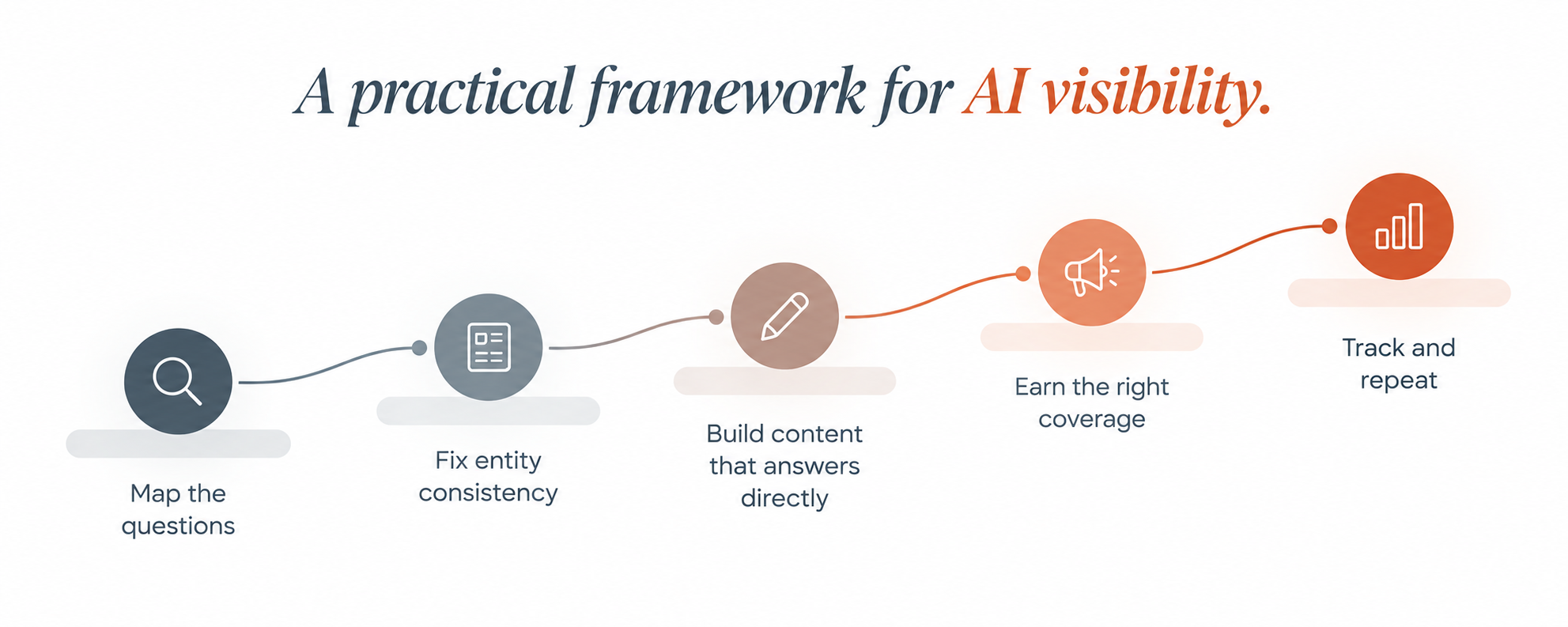
Once you understand where you stand, the work follows a consistent pattern.
Map the questions people actually ask AI tools about your category, not just the keywords you'd normally target
Check entity consistency across your website, LinkedIn, directories and any press coverage, and fix what doesn't match
Build or rework content so it answers those questions directly, with clear headings and facts stated plainly near the top
Earn coverage and mentions from the sources that actually get cited in your category, not just your usual media list
Track what AI tools say about you, then repeat the process as the picture changes
Common pitfalls
A few mistakes come up again and again.
Treating this as a one off audit rather than an ongoing discipline. AI answers change as new content and coverage appear, so a single fix doesn't hold
Chasing rankings while ignoring what AI tools are actually saying about you, which are increasingly two different questions
Trying to buy or fake third party validation. Paid and advertorial content barely features in what AI tools cite, so it's not a shortcut
Letting basic facts drift across your website, LinkedIn and press mentions, which confuses AI as much as it confuses a new customer
Going quiet after a crisis and assuming the story has moved on. AI tools can keep surfacing old coverage long after the headlines stop, which is one of the reasons crisis communications and AI visibility are now so closely linked
How this comes together in practice
The money.co.uk business statistics page is the clearest example of this working end to end. It started with a genuine content gap: no single, well sourced place existed for UK business statistics. I developed the strategy to fill that gap with original data, built to be cited rather than just read.
The content answered real questions directly. The organisation behind it was consistent and easy to identify. And the coverage that followed came from sources people trust, which meant it built entity authority as well as traffic. Four years on, the page outranks the ONS and GOV.UK for its main search term, has more than 550 backlinks, and has been cited in a Google AI Overview.
None of that happened through a single tactic. It came from getting the content, the entity and the earned coverage working together, which is the same approach behind everything on this page.
Want your brand showing up in the answers, not just the search results?
I help organisations build the earned authority, content and consistency that AI tools look for when deciding who to cite. If you want a clearer picture of where your brand stands today, get in touch or explore my freelance services.

About the author
Robbie Centellas is a senior marketing and communications consultant with almost two decades of experience across PR, digital PR, content, corporate communications and crisis communications. His work includes leading a digital PR programme at RVU delivering 25,000+ pieces of coverage and 16,000+ high-authority backlinks, and developing the Eat Less Move More campaign with Amy Tapper and Fat Tony. Read more about Robbie.
AI & GEO Strategy FAQs
-
GEO is the practice of helping AI tools such as ChatGPT, Google AI Overviews and Perplexity understand and cite your brand accurately. It sits alongside SEO rather than replacing it, focusing on earned media, consistent facts and content built to be cited.
-
Traditional SEO aims to rank a page in search results. AI search, or GEO, aims to get a brand mentioned inside the answer itself. A page can rank well and still never appear in an AI generated response, which is why the two need different approaches.
-
Yes. AI tools draw heavily on earned media when describing brands, with the majority of citations coming from coverage rather than paid content. Digital PR that earns mentions from credible, relevant sources is one of the strongest levers for AI visibility.
-
Item A freelance consultant can absolutely handle this. AI search strategy depends on joined up thinking across PR, content and entity consistency, which a senior individual working across all three is often better placed to deliver than a team split across separate specialisms.
-
It varies, but AI tools tend to reward consistency built up over months rather than a single campaign. Recent, credible coverage carries more weight than older mentions, so steady activity tends to outperform a one off push.
-
Some technical basics still help, such as clear site structure and fast loading pages, but the bigger gains usually come from earned media, consistent brand facts and content built to answer real questions directly, rather than technical changes alone.