
Media training spokespeople: my top 20 tips and Tricks
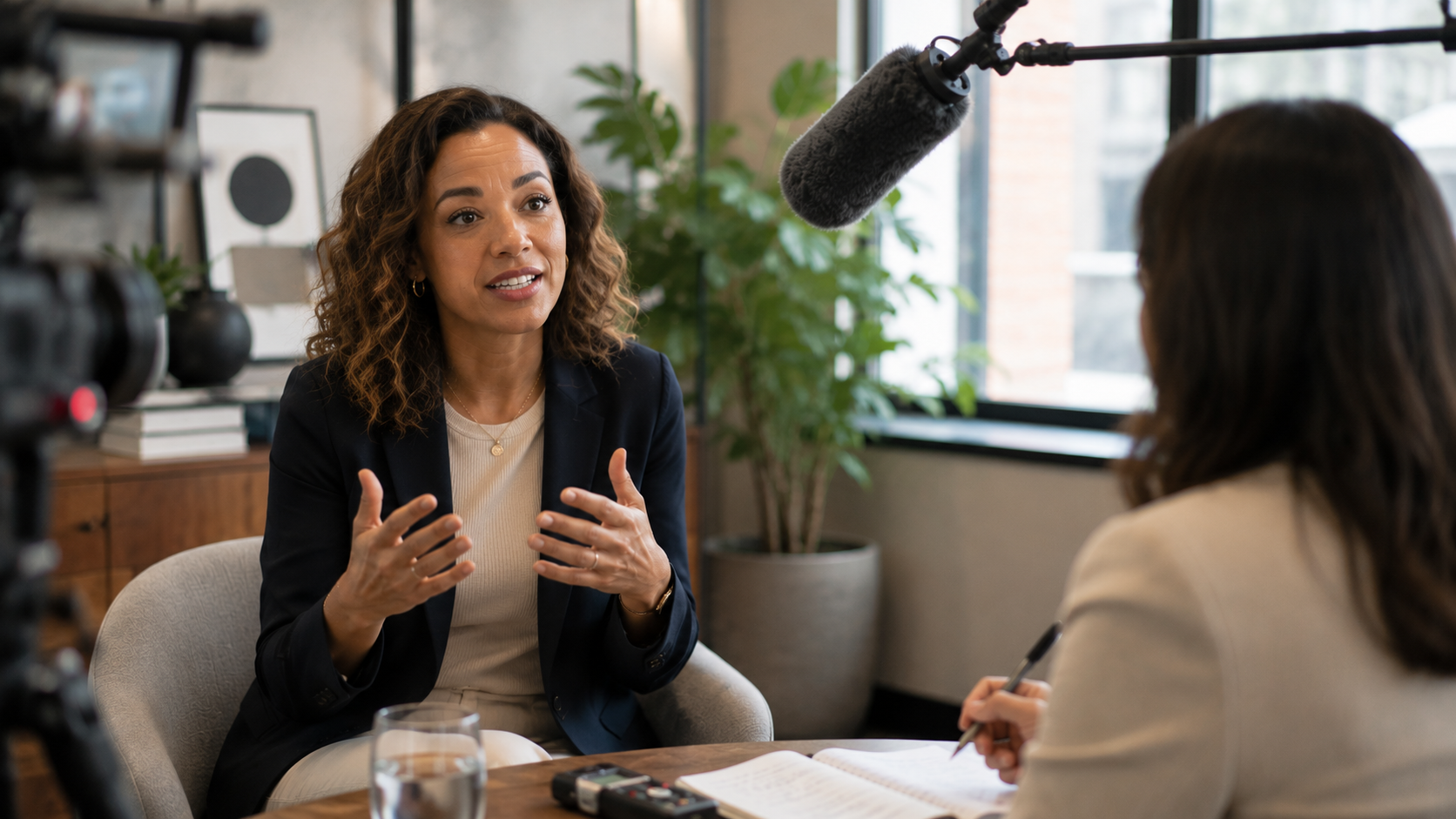
I have sat in more media training sessions than I can count, on both sides of the table. I have coached first time spokespeople who freeze the second a recorder appears, and I have coached seasoned executives who talk beautifully but say nothing useful. The goal is always the same. Get them ready quickly, keep them accurate, and leave them genuinely confident rather than just rehearsed.
Media training is a vital part of your corporate communications strategy, and here are the 20 tips I come back to again and again.
What is media training for spokespeople?
Media training gets your spokespeople ready for the moment the red light comes on. It gives them the skills and confidence to talk to journalists, broadcasters and podcasters without freezing, rambling or saying something they'll regret.
A good session covers the essentials: shaping the messages you want to land, handling tough or unexpected questions, bridging back to key points, reading body language and staying composed under pressure. The aim isn't to turn people into polished robots. It's to help them sound like themselves, only sharper.
Getting the foundations right
Start with the message house, not the interview
Before anyone rehearses a single answer, they need a clear top-line message, three supporting pillars, and proof points for each. Everything else in training hangs off this structure. so make sure you have a clear message house in place first.Agree the one thing you want people to remember
If a spokesperson can only get one sentence across, what should it be? I ask this question first, because it shapes every other answer they give.Build proof points from real evidence
Vague claims fall apart under pressure. Specific numbers, named campaigns, and real outcomes hold up, and they give a spokesperson something solid to lean on.Separate facts from opinion in the brief
Spokespeople need to know exactly what they are authorised to say as fact, what is company opinion, and what is genuinely off limits. Blurring these lines is where most accuracy problems start.Rehearse the worst question first
I always ask the hardest, most awkward question in the room before anything else. It takes the fear out of the rest of the session and shows the spokesperson they can survive it.
Building the core skills
Teach bridging properly
Bridging is not dodging. It is acknowledging the question, then moving deliberately to the message. Phrases like "what matters here is" or "the real story is" work far better than an obvious swerve.Practise the pause
A short pause before answering makes a spokesperson sound considered rather than rehearsed. Silence feels uncomfortable in training and looks confident on camera.Keep answers to three sentences
Long answers give journalists more to cut and more room for something to be taken out of context. Short, clear answers protect the message and are easier to remember under pressure.Train for soundbites, not scripts
A memorised script falls apart the moment a question comes from an unexpected angle. A handful of well built soundbites can be dropped into almost any answer naturally.Use real journalist questions in rehearsal
I always pull genuine questions from recent coverage of the sector rather than generic examples. It makes the training feel real and exposes gaps the spokesperson did not know they had.
Building confidence, not just competence
Film every practice run
Watching yourself back is the fastest way to fix nervous habits, filler words, and body language issues. Most people are far harder on themselves in playback than any journalist would be.Address body language early
Crossed arms, fidgeting, and avoiding eye contact undermine even the strongest message. I cover this before the toughest questions, so nerves do not compound the problem later.Normalise not knowing an answer
The confident response to a question outside their brief is "that is not something I can speak to today, but I can find out." Spokespeople who understand this stop panicking about being caught out.Reframe nerves as adrenaline
Nerves and excitement feel almost identical in the body. I get spokespeople to relabel what they are feeling, which genuinely changes how they perform.Build up gradually with stakes
I start with low-pressure practice questions, then move to mock interviews with a timer, then simulate a genuinely tricky scenario. Confidence builds in layers, not in one big leap.
Handling pressure and difficult moments
Train for interruptions
Live interviews rarely go in a straight line. I deliberately interrupt spokespeople mid-answer in training so they learn to hold their thread when a journalist talks over them.Cover hostile and leading questions specifically
Questions that assume guilt, exaggerate a problem, or put words in someone's mouth need a dedicated response technique, such as correcting the premise before answering.Prepare separately for print, broadcast and social
A quote for a trade title, a soundbite for broadcast, and a response for social media all need different pacing and tone. I never let a spokesperson assume one style covers all three.Run a full crisis simulation
Even for spokespeople who will only ever do positive news interviews, one crisis simulation shows them how their message holds up under real pressure, and where it needs reinforcing.Debrief every single time
After each session, I go through what worked, what did not, and what to adjust before the next one. Media training is not a one-off event; it is a skill that needs maintaining.
The bottom line
Good media training is not about turning spokespeople into polished performers who sound the same as everyone else. It is about giving them a clear structure, real practice under pressure, and enough repetition that confidence becomes genuine rather than performed. Do that well, and accuracy and confidence tend to follow each other naturally.
If you are looking for senior communications expertise that combines strategic instinct with smart use of AI, get in touch to discuss how I can help in turning your spokesperson into a confident interview expert.
About the author
Robbie Centellas is a senior marketing and communications consultant with almost two decades of experience across PR, digital PR, content, corporate communications and crisis communications. His work includes leading a digital PR programme at RVU delivering 25,000+ pieces of coverage and 16,000+ high-authority backlinks, and developing the Eat Less Move More campaign with Amy Tapper and Fat Tony. Read more about Robbie.
